 blog
Best Blackout Shades for Bedrooms: 2026 Buyer's Guide
Table of Contents
- Why Blackout Shades for Bedrooms Matter More Than You Think
- Top Styles: Blackout Roller Shades for Bedrooms
- Blackout Cellular Shades: Insulation Meets Darkness
- How to Measure Windows for Blackout Shades
- Inside Mount vs. Outside Mount Blackout Shades
- Light Leakage Fixes and Smart Integration for Better Sleep
- Conclusion: Choosing the Best Blackout Shades for Bedrooms
- Frequently Asked Questions
Last Updated: October 8, 2026
Why Blackout Shades for Bedrooms Matter More Than You Think
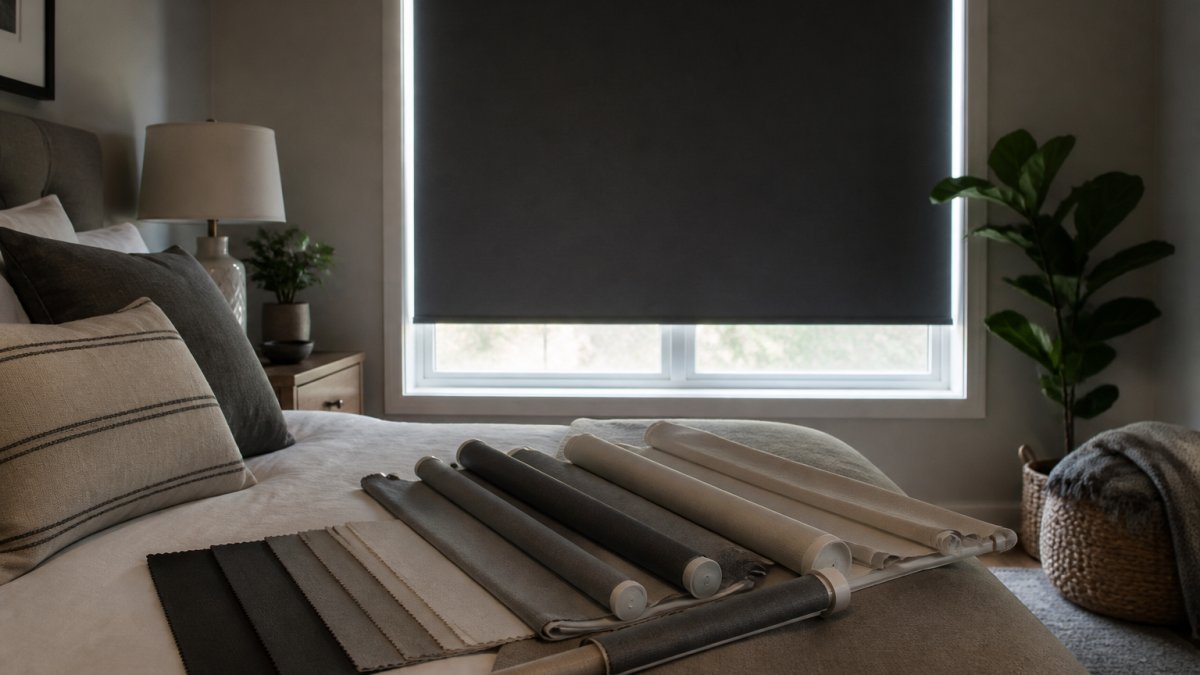
The best blackout shades for bedrooms do one job exceptionally well: they block outside light so completely that your room stays dark at 2 a.m. in summer and 7 a.m. in winter. At Towersunitedblinds, we install window coverings, and bedroom light control is a frequent request.
Sleep quality is the reason. A dark room supports the body's natural melatonin production, and melatonin is the hormone that governs how quickly you fall asleep and how deeply you stay there. Outside light at the wrong hour tells your brain it is daytime. That signal is hard to override with willpower alone.
Here is what most buying guides get wrong. They treat "blackout" as a single specification when it is really a system of three parts: the fabric's opacity, how the shade mounts to the window, and how you seal the edges. Miss any one of those and light leaks in.
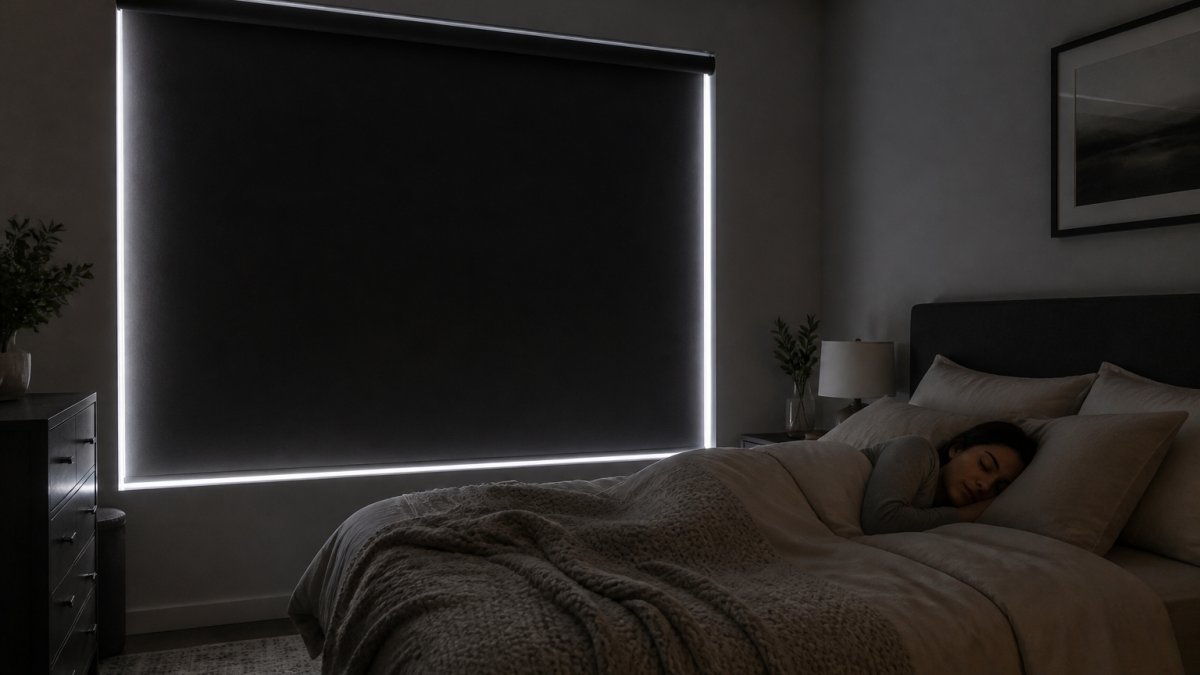
Top Styles: Blackout Roller Shades for Bedrooms
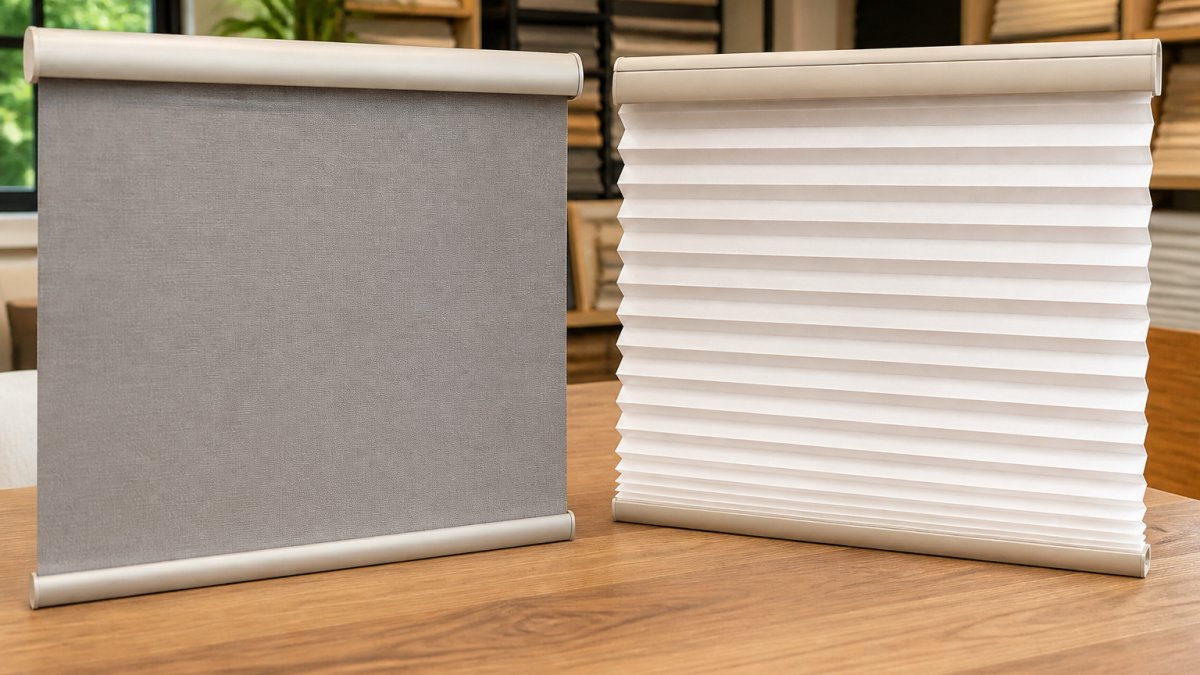
Blackout roller shades for bedrooms are the most popular choice because they roll into a compact headrail and block light with a single flat panel.
Why do they win for bedrooms? Simplicity. There are no cords to tangle, no stack of fabric at the window, and nothing to dust. A cordless mechanism is standard on most modern rollers, which also matters for cordless safety in homes with kids or pets.
The trade-off is edge control. A roller shade mounted flat against the frame still leaves a light gap at the sides and top. That is fixable with side channels, a pair of slim tracks that the shade edges run inside.
Where roller shades fall short: they are not insulating. If your bedroom runs cold in winter, a roller blocks light but does little for heat retention. That is where cellular shades come in.
Blackout Cellular Shades: Insulation Meets Darkness
Blackout cellular shades solve two problems at once. The honeycomb cells trap air between the fabric layers, which slows heat transfer, and a blackout liner blocks light. For a bedroom over a garage or on a north-facing wall, that combination is hard to beat.
The thermal insulation benefit is real and measurable in comfort terms. The trapped air acts as a buffer between the glass and the room. In summer it slows heat coming in; in winter it slows heat leaving. Homeowners chasing energy efficiency often start with the coldest room in the house.
| Style | Light Blocking | Insulation | Best For |
|---|---|---|---|
| Roller | High with side channels | Low | Clean look, any window |
| Cellular | High with liner | High | Cold or hot rooms |
| Roman | Medium to high | Medium with lining | Traditional bedrooms |
A note on fabric opacity. Blackout is a rating, not a guarantee. A fabric can be blackout-rated and still show a glow at the edges if the mounting is loose. We always check the frame before recommending a style.
How to Measure Windows for Blackout Shades
Measuring for blackout shades is where most DIY projects go wrong, because blackout rewards precision more than any other window treatment. A quarter inch of error that is invisible on a sheer curtain becomes a glowing seam on a blackout shade.
Measure the width in three places: top, middle, and bottom of the frame. Use the narrowest number. Measure the height in three places too: left, center, and right. Use the tallest number.
Decide your mounting depth before you order. For an inside mount, you need enough recess depth for the headrail plus clearance for the fabric to roll. For an outside mount, add overlap on all four sides, typically two to three inches beyond the frame, so the shade can cover the light gap.
- Measure width at top, middle, bottom; use the smallest
- Measure height at left, center, right; use the largest
- Check recess depth against the headrail spec
- For outside mount, add 2-3 inches of overlap per side
Custom window treatment sizing is not a luxury here. It is the difference between a dark room and a room with a bright outline around the window.
Inside Mount vs. Outside Mount Blackout Shades
Inside mount vs. outside mount blackout shades is the decision that most affects how dark your room actually gets, more than fabric choice, more than brand.
The single biggest factor is recess depth. A standard inside mount needs enough depth for the headrail plus clearance for the fabric to roll without rubbing the glass or the trim.
Inside mount wins on looks and on top-and-side light control, because the recess itself shades the edges of the shade. It also keeps the shade out of the way of furniture and window hardware.
Outside mount wins on light control and flexibility.
Here is the practical decision logic we use on installs:
- Deep, square recess (2.5 inches or more of usable depth): inside mount, and add a cassette or fascia if you want the top roll hidden.
- Shallow recess or out-of-square frame: outside mount with 2 to 3 inches of overlap per side, plus side channels.
- Sliding glass door or patio door: outside mount only, with a cassette and a bottom seal.
- Window with deep trim or a window seat: outside mount onto the wall above the trim so the shade clears the sill.
- Rental or no-drill situation: outside mount with tension brackets or adhesive-mount brackets, accepting slightly less overlap.
A common pattern in older homes is a frame that is out of true by a half inch or more.
One more consideration: inside mount limits how much overlap you can get, so if your goal is total blackout rather than a clean look, outside mount with side channels is usually the safer bet.
Light Leakage Fixes and Smart Integration for Better Sleep
Most guides stop at "buy blackout fabric." That is the easy part. The hard part, and the part almost nobody covers, is sealing the four edges of the window so the fabric actually delivers a dark room.
Light leaks come from four zones, and each needs a different fix:
- Side gaps (the halo effect). The vertical edges of a roller or cellular shade rarely sit flush against the jamb. Side channels, slim aluminum or PVC tracks the shade edges ride inside, close this gap. They are the single highest-impact upgrade for total blackout, and they also reduce fabric sway and edge fraying.
- Top gap. The headrail leaves a bright line across the ceiling if it is left open. A cassette or fascia encloses the roll and blocks that line. On an outside mount, mounting the headrail above the trim and letting the fabric overlap the top of the frame does the same job.
- Bottom gap. A shade that stops short of the sill leaks light along the floor line. A bottom seal, a weighted bar, a magnetic strip, or a sill channel, closes it. On a sliding door, a floor channel is the cleanest solution.
- Perimeter gaps on outside mounts. Even with overlap, light can wrap around the edges. Adding a return or a side channel to an outside mount closes the wrap.
For renters or anyone who cannot drill into the frame, no-drill options exist: tension-mounted side channels that press into the jamb, adhesive-backed light-blocking strips, and magnetic edge seals that attach to the trim. They are not as airtight as screwed-in channels, but they close most of the halo and are fully removable.
Smart home integration is the second gap most guides skip. A motorized lift turns a blackout shade from a manual chore into part of a sleep routine. The practical setup looks like this:
- Scheduling. Set the shade to close at dusk and open at a set wake time. This supports a consistent sleep-wake rhythm without relying on willpower.
- Voice assistants. Most motorized shade systems pair with the major voice assistants, so "close the bedroom shades" works hands-free.
- Automation hubs. Many systems also integrate with popular home automation platforms, which lets the shade trigger off other devices, a bedtime scene, a sunrise routine, or a motion sensor.
- Solar and time-based triggers. Some controllers use sunrise/sunset data or a light sensor so the shade closes when the sun actually hits the glass, not at a fixed clock time.
Two more benefits worth knowing. A lined or cellular shade adds some noise reduction, which helps on a street-facing bedroom. And a UV-blocking fabric slows the furniture fading that sunlight causes over years, protection that is easy to overlook until a sofa or rug shows the damage.
Conclusion: Choosing the Best Blackout Shades for Bedrooms
Picking the best blackout shades for bedrooms comes down to matching the style to the room, then sealing every edge. Roller shades with side channels suit clean, modern bedrooms. Cellular shades suit rooms that run too hot or too cold. Roman shades bring a softer look where insulation matters less.
The measurement and mounting decisions matter as much as the fabric. Get those right and a blackout shade does exactly what it promises.
If you would rather not gamble on a custom fit, that is what we do. Towersunitedblinds offers roller, cellular, and Roman shades with tailored sizing and professional installation. Our customers tell us the process was easy and the results speak for themselves.
Frequently Asked Questions
What type of shades are best for bedrooms?
Blackout roller shades and blackout cellular shades are the top choices for bedrooms. Roller shades offer a clean, flat profile that blocks light effectively, while cellular shades add a layer of thermal insulation and noise reduction. For the best blackout performance, pair either style with side channels or an outside mount to minimize light gaps around the window frame.
Are blackout shades worth it for bedrooms?
Yes, blackout shades are worth it for most bedrooms. They block nearly all incoming light, which supports melatonin production and a consistent sleep-wake cycle. They also reduce outside noise, improve privacy, and can lower cooling costs by keeping heat out during summer. If you need total darkness for shift work or light sensitivity, blackout shades are the most practical window treatment available.
How can you reduce light gaps around blackout shades?
To reduce light gaps, choose an outside mount that overlaps the window frame by at least 2 inches on each side, or add side channels that guide the shade edges into a track. For inside mounts, use a light-blocking liner and ensure the shade sits close to the glass. You can also apply weatherstripping or blackout tape along the frame edges to seal small leaks.
Are cellular shades a good choice for bedroom blackout?
Blackout cellular shades are an excellent choice for bedrooms because they combine light blocking with thermal insulation. The honeycomb cells trap air, which helps retain heat in winter and keep rooms cooler in summer. They also dampen outside noise. For the darkest possible room, select a cellular shade with a blackout lining and use an outside mount with side channels.
Old windows, odd sizes, and light gaps are the three things that ruin a blackout project, and all three are solvable with the right measurements and mounting. Towersunitedblinds handles custom sizing, professional installation, and a full range of roller, cellular, and Roman shades so your bedroom ends up genuinely dark. Call us today to schedule a consultation and get shades fitted to your exact windows.