 blog
Roller Shades vs Cellular Shades: Energy Efficiency
Table of Contents
- Cellular Shades vs Roller Shades: Key Differences
- Energy Efficient Cellular Shades: Thermal Performance
- Blackout Roller Shades for Energy Efficiency
- Solar Shades vs Cellular Shades: Which Performs Better
- Installation Quality and Air Leakage: The Hidden Factor
- Lifecycle Cost and Long-Term Value
- Which Shade Type Should You Choose?
- Frequently Asked Questions
Last Updated: October 18, 2026
Cellular Shades vs Roller Shades: Key Differences
When choosing window treatments, the decision between cellular shades and roller shades often comes down to cellular shades energy efficiency. Both options offer distinct advantages, but they work in fundamentally different ways.
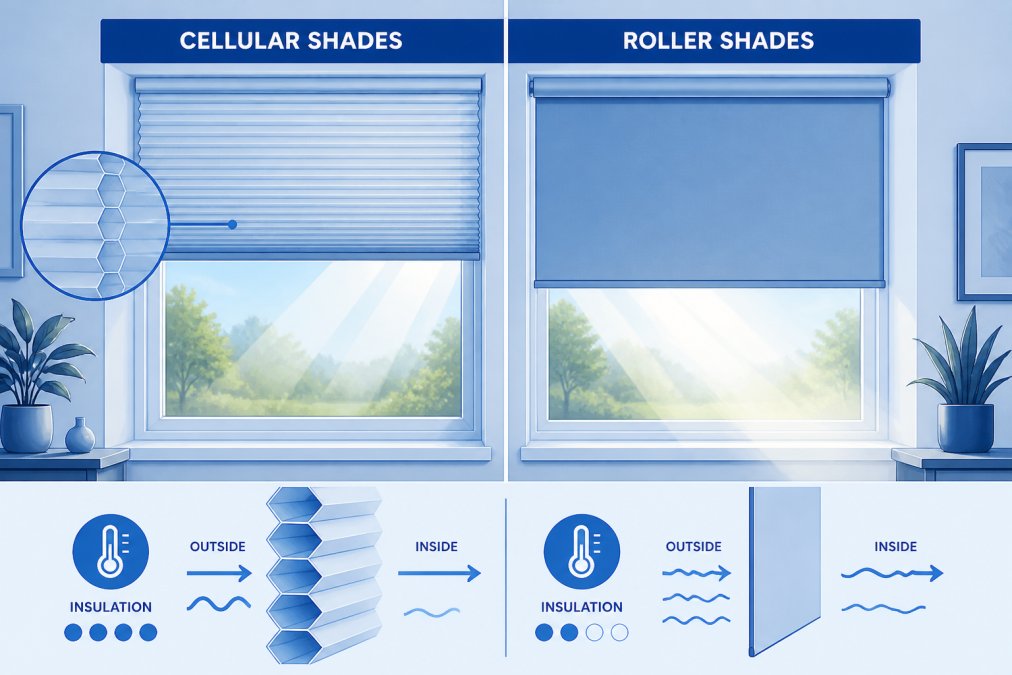
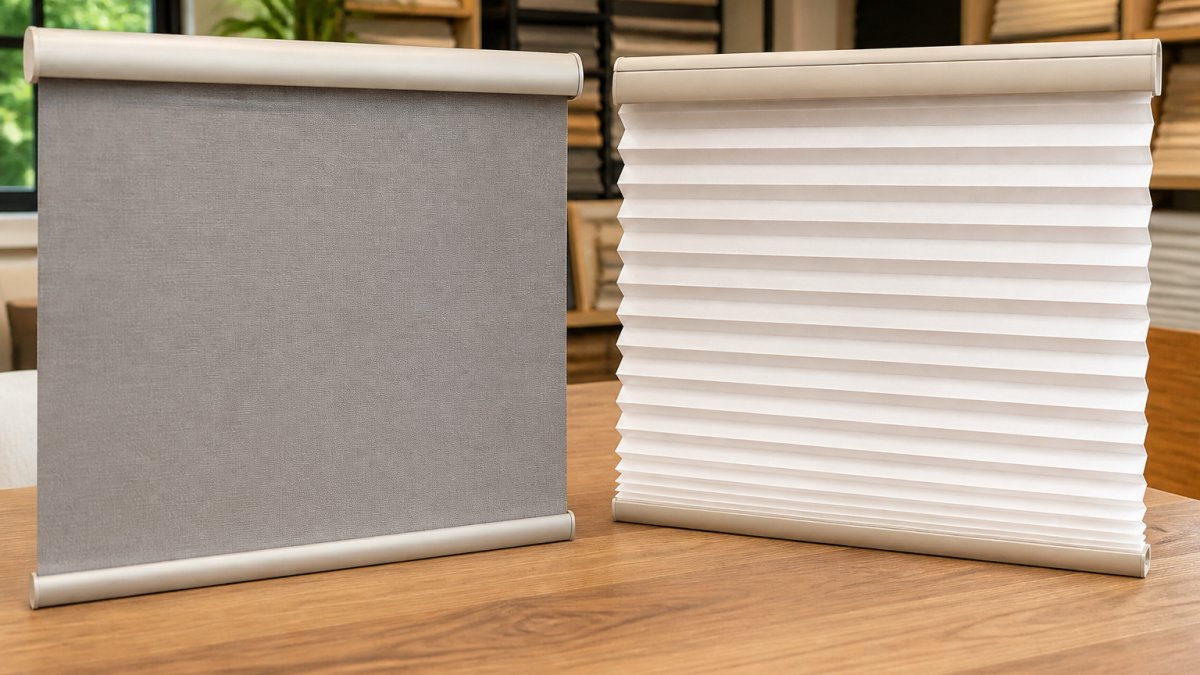
Cellular shades use a honeycomb structure with air pockets. Roller shades feature a flat fabric that rolls up and down. The core difference affects how much heat your windows lose or gain.
Cellular shades trap air in their cells. This creates an insulating layer between your window and your room. Roller shades sit flat against the window frame.
Think of it this way: cellular shades act like a blanket with pockets of air. Roller shades act like a curtain that blocks the view.
How Honeycomb Cells Trap Air
The honeycomb structure in cellular shades is the key to their energy efficiency. Each cell is a small pocket of air.
Single-cell shades have one row of air pockets. Double-cell shades have two rows. Triple-cell shades have three rows. More cells mean more insulation, but also more cost and weight.
Air moves slowly through these pockets. This slows heat transfer in winter and summer. In cold months, warm air stays inside longer. In hot months, cool air stays inside longer.
The fabric used in cellular shades also matters. Thicker, denser fabrics trap more air and provide better insulation. Lighter fabrics still insulate, but not as much.
Roller Shade Construction and Light Control
Roller shades use a simple, flat design. A single piece of fabric wraps around a tube. You pull a cord or chain to raise or lower the shade.
This simplicity makes roller shades affordable and easy to install. They work well for renters and people who move frequently. The flat design also gives you more style options.
Light control depends on the fabric opacity. Sheer fabrics let light through. Semi-opaque fabrics block some light. Blackout fabrics block nearly all light. A blackout roller shade can darken a room almost completely.
Roller shades don't insulate like cellular shades do. A flat piece of fabric, even a thick one, doesn't create air pockets.
Energy Efficient Cellular Shades: Thermal Performance
Cellular shades lead in cellular shades energy efficiency for one reason: the air pockets. These pockets slow heat movement through your windows. In winter, they keep warm air inside. In summer, they keep hot air outside.
Research from building science shows that windows account for significant heat loss in homes (Windows). Adding cellular shades reduces this loss. The exact amount depends on the shade design and your climate.
Single-Cell vs Double-Cell Cellular Shades
Single-cell cellular shades have one layer of honeycomb. They provide basic insulation at a lower cost.
Double-cell shades have two layers of honeycomb. They trap more air and provide better insulation. They cost more but deliver greater energy savings over time.
Triple-cell shades exist but are less common. They offer maximum insulation but are heavier and more expensive. Most homeowners find double-cell shades strike the right balance.
The cells in quality shades are sealed at the bottom. This prevents air from escaping. Cheaper shades may have open cells, which reduces their insulating value.
Cell size also affects performance. Larger cells trap more air. Smaller cells create more layers but trap less air per cell.
Heat Loss and Insulation Ratings
Heat loss through windows is measured in R-value. A higher R-value means better insulation. Single-pane windows have very low R-values. Adding cellular shades increases the R-value significantly.
The R-value added by cellular shades depends on several factors:
- Cell count (single, double, or triple)
- Cell size and design
- Fabric thickness and density
- How well the shade fits your window frame
- Air gaps around the edges
Double-cell shades typically add more R-value than single-cell. But a perfectly fitted single-cell shade may outperform a poorly fitted double-cell shade.
Installation quality matters as much as the shade itself. Gaps around the edges allow air to flow around the shade. Custom-fit shades that seal tightly against your window frame perform much better than standard sizes with gaps.
Blackout Roller Shades for Energy Efficiency
Blackout roller shades offer energy benefits that many people overlook. A quality blackout fabric blocks light completely. It also reflects heat and reduces solar gain.
In summer, solar heat coming through windows raises indoor temperatures. Blackout shades reflect much of this heat back outside. This reduces cooling costs. The effect is strongest on south-facing and west-facing windows that get direct afternoon sun.
In winter, blackout shades still provide some insulation benefit. The thick fabric slows heat loss, though not as much as cellular shades do.
Fabric Opacity and Solar Heat Rejection
Fabric opacity describes how much light the shade blocks. Light-filtering fabrics let some light through. Semi-opaque fabrics block 50-70% of light. Blackout fabrics block 95%+ of light.
Solar heat rejection refers to how much heat the fabric reflects. Darker colors and denser weaves reject more heat. A white or light-colored blackout shade reflects more heat than a dark one.
For maximum energy efficiency, choose a light-colored blackout roller shade on windows that get strong afternoon sun. This combination blocks light and reflects heat.
The trade-off is style. Blackout shades in light colors may not match your décor. Darker blackout shades fit more design styles but reflect less heat.
Solar Shades vs Cellular Shades: Which Performs Better
Solar shades are a specialized type of roller shade. They use a semi-transparent fabric that lets you see outside while blocking most of the sun's heat.
Solar shades excel at heat rejection. Their tight weave reflects solar radiation. They're ideal for windows with intense afternoon sun. You get natural light without excessive heat gain.
Cellular shades excel at insulation. They work year-round in all climates. They provide more winter heating benefits than solar shades.
The choice depends on your priorities:
- Choose solar shades if heat rejection is your main goal
- Choose cellular shades if year-round insulation matters most
- Choose blackout roller shades if you want maximum light control plus heat rejection
Climate matters too. In hot climates, solar shades shine. In cold climates, cellular shades deliver bigger savings.
Installation Quality and Air Leakage: The Hidden Factor
Even the best shade performs poorly if it's installed wrong. Air leakage around the edges can eliminate most energy benefits.
Gaps between the shade and the window frame let air flow around the shade. This bypasses the insulation. In winter, warm air escapes. In summer, cool air escapes.
Side Gaps and Mounting Options
Shades can mount inside the window frame or outside it. Inside mounts fit within the frame opening. Outside mounts attach to the wall or frame edge.
Inside mounts are cleaner looking but may leave gaps if your window frame is irregular. Outside mounts can seal tighter because they cover the entire window area.
Custom-fit shades minimize gaps. Standard sizes often leave visible gaps, especially on older windows. Towersunitedblinds offers custom sizing to fit your exact window dimensions.
Brackets and hardware affect seal quality too. Quality brackets hold the shade tight against the frame. Cheap brackets allow movement and flexing, which creates gaps.
Custom Fit and Window-Specific Performance
Custom-fit shades perform significantly better than standard sizes. We measure your windows precisely. We account for irregular frames and old windows.
A custom-fit cellular shade that seals tightly around all edges will outperform a standard double-cell shade with large gaps. The seal matters as much as the shade design.
Older windows with warped frames present challenges. Custom shades can be made to fit even difficult windows. This ensures maximum energy efficiency regardless of your window condition.
Lifecycle Cost and Long-Term Value
Energy savings add up over time. A cellular shade that reduces heating costs by 10-15% pays for itself in a few years. After that, it's pure savings.
The calculation depends on your climate, energy prices, and window area. Cold climates see bigger savings. Homes with large windows see bigger savings. Higher energy costs mean faster payback.
Energy Savings Over Time
Winter heating is usually the biggest energy cost. Cellular shades reduce this cost by slowing heat loss. The savings compound year after year.
Summer cooling savings are smaller in most climates. But in hot regions, cellular shades still help. They reduce solar gain and lower air conditioning costs.
A typical homeowner might save $100-$300 per year on energy bills with cellular shades on all windows. Over 10 years, that's $1,000-$3,000 in savings. Many shades last 10-15 years or longer.
Durability and Maintenance
Quality cellular shades last 10-15 years with normal use. Roller shades often last 8-12 years. The difference comes down to the mechanism and fabric quality.
Maintenance is simple for both types. Dust with a soft brush monthly. Wipe with a damp cloth if needed. Avoid excessive moisture.
Cellular shades are more durable in dry climates. In humid bathrooms or kitchens, the moisture can affect the cells over time. For these areas, blackout roller shades often last longer.
Which Shade Type Should You Choose?
The best choice depends on your priorities and situation. Both options have merit. The answer isn't one-size-fits-all.
Climate and Window Orientation Matter
Cold climates favor cellular shades. The insulation benefit is biggest when heating costs are high. In Minnesota, Maine, or Colorado, cellular shades deliver the best return on investment.
Hot climates favor solar shades or blackout roller shades. Heat rejection matters more than insulation. In Arizona, Texas, or Florida, these options make more sense.
Window orientation affects the choice too. South-facing and west-facing windows get strong afternoon sun. These windows benefit most from solar or blackout shades. North-facing windows get less sun but lose heat in winter. These benefit most from insulation.
Privacy, Light Control, and Style Preferences
Roller shades offer more style options. Hundreds of colors and patterns are available. If matching your décor is important, roller shades win.
Cellular shades come in fewer style options. They look more utilitarian. But they've improved. Modern cellular shades come in various colors and designs.
Privacy needs also matter. Cellular shades provide privacy while still letting light through. Roller shades can be blackout for total privacy. Sheer roller shades offer no privacy.
Light control is another factor. If you need total darkness, blackout roller shades are best. If you want to see outside while blocking heat, solar shades work well. If you want privacy with some light, cellular shades fit well.
Choosing between roller shades and cellular shades comes down to balancing energy efficiency, style, and your specific needs. Our team ensures professional installation that maximizes energy performance and delivers lasting value. Contact us today for a free consultation and discover how the right window shades can transform your home's comfort and efficiency.
Frequently Asked Questions
Are cellular shades more energy efficient than roller shades?
Cellular shades generally outperform roller shades for energy efficiency due to their honeycomb structure, which traps air in pockets that act as an insulating layer. Double-cell and triple-cell options provide even greater thermal resistance. Roller shades offer some insulation with blackout fabrics and proper installation, but cannot match the air-trapping design of cellular shades. Your specific savings depend on window size, climate, and installation quality.
What is the difference between single-cell and double-cell cellular shades?
Single-cell shades have one row of honeycomb pockets, while double-cell shades have two rows stacked together. Double-cell shades provide approximately 25-30% better insulation performance and reduce heat loss more effectively in cold climates. They also offer improved sound dampening. The trade-off is slightly higher cost and reduced light filtering. For maximum energy efficiency, double-cell shades are the superior choice, especially in regions with significant temperature swings.
Do blackout roller shades help with energy efficiency?
Blackout roller shades reduce solar heat gain by blocking direct sunlight and can lower cooling costs in hot climates. The thick, opaque fabric reflects and absorbs thermal energy. However, they do not trap air like cellular shades, so their insulation value is limited compared to honeycomb structures. Blackout roller shades work best as part of a layered approach: use them during peak sun hours and combine with other window treatments for year-round efficiency.
How much can I save on heating and cooling costs with cellular shades?
Potential savings depend on window area, climate zone, existing insulation, and how consistently you use the shades. Homeowners in cold climates may see 5-15% reductions in heating costs by minimizing heat loss through windows. In hot climates, proper use of blackout or reflective shades during peak sun hours can reduce cooling costs similarly. Professional installation that eliminates side gaps significantly improves performance. Contact Towersunitedblinds for a custom assessment based on your home's specific windows and climate.