 blog
Best Custom Shade Company Alternatives: 2026 Guide
Table of Contents
- Why Homeowners Are Looking Beyond Big-Box Custom Shade Companies
- Quick Comparison: Custom Shade Company Alternatives at a Glance
- Online Retailers vs. Local Providers: Where Your Money Actually Goes
- Finding Custom Roller Shades Near Me: Why Local Matters
- Affordable Custom Blinds Without Sacrificing Quality
- Custom Shade Installation: DIY vs. Professional
- Motorized Roller Shades and Smart Home Integration
- What to Compare Before You Choose a Custom Shade Provider
- Frequently Asked Questions
Last Updated: October 12, 2026
Why Homeowners Are Looking Beyond Big-Box Custom Shade Companies
The best custom shade company alternatives give you the same tailored fit and finish without the big-box markup or the weeks-long wait. Homeowners increasingly turn to local providers and direct-to-consumer online retailers because they want better pricing, faster turnaround, and a real person who answers the phone.
At Towersunitedblinds, we hear the same frustration every week: a homeowner orders from a national chain, waits three weeks, and still ends up with light gaps around an odd-sized window.
Below, we'll show you exactly how the alternatives stack up, where your money actually goes, and how to pick the right provider for your home.
Quick Comparison: Custom Shade Company Alternatives at a Glance
Most articles on this topic compare shade types, roller versus Roman versus cellular. That's the wrong axis. The real decision is which service model you buy from, because that determines who measures, who installs, who eats the cost of a mistake, and what your warranty actually covers.
Here's how the four main service models compare on the factors that decide whether you're happy in year three.
| Service Model | Who Measures | Who Installs | Typical Lead Time | Warranty Holder | Where the Money Goes |
|---|---|---|---|---|---|
| Local independent shop | Provider, in your home | Provider or you | 1-2 weeks | The shop itself | Labor, samples, local overhead |
| Online direct-to-consumer | You | You | 1-3 weeks | The manufacturer | Fabrication, shipping, ad spend |
| National franchise | Franchise rep, in your home | Franchise installer | 2-4 weeks | Corporate warranty network | Franchise fees, national marketing |
| Big-box retailer | You (or paid add-on) | You (or paid add-on) | 1-2 weeks | Store return policy, then manufacturer | Retail margin, store overhead |
What the table doesn't tell you. Three things separate these models more than price does:
- Who owns a measurement error. With an online retailer, a shade cut to your wrong number is yours to keep, most manufacturers treat custom-cut goods as non-returnable. With a local or franchise provider who measures, the re-order is their problem. That single clause is often worth more than a 15% price difference.
- What "warranty" actually covers. A manufacturer warranty typically covers defects in the fabric, the mechanism, or the motor, not the fit, not the installation, and not labor to remove and rehang. A provider warranty that includes a service call is a different product entirely. Ask which one you're getting in writing.
- Who you call in year four. A national chain has a phone tree and a service network. A two-person local shop has the owner's cell number, until the owner retires. Neither is automatically better; you just need to know which risk you're accepting.
A note on "budget-friendly." The cheapest line item is rarely the cheapest outcome. A DIY-measured shade that arrives a quarter-inch narrow, gets reordered once, and still needs a handyman to hang it can easily cost more than the local shop's original quote.
Online Retailers vs. Local Providers: Where Your Money Actually Goes
Online retailers keep costs down by cutting the showroom, the sales rep, and the in-home visit. That savings usually shows up in your final price, but it shifts the measuring risk onto you. Get a measurement wrong and you own the mistake.
Local providers charge more because they do the measuring, the fitting, and the follow-up themselves. That's the part most buyers undervalue until something goes wrong.
A common mistake is assuming the cheapest quote is the best deal. Factor in the cost of a re-order if your DIY measurement is off by a quarter inch, and the gap often closes fast.
Finding Custom Roller Shades Near Me: Why Local Matters
Searching for custom roller shades near me usually surfaces two very different results: national brands with local installers, and genuinely local shops. The difference matters more than most shoppers realize.
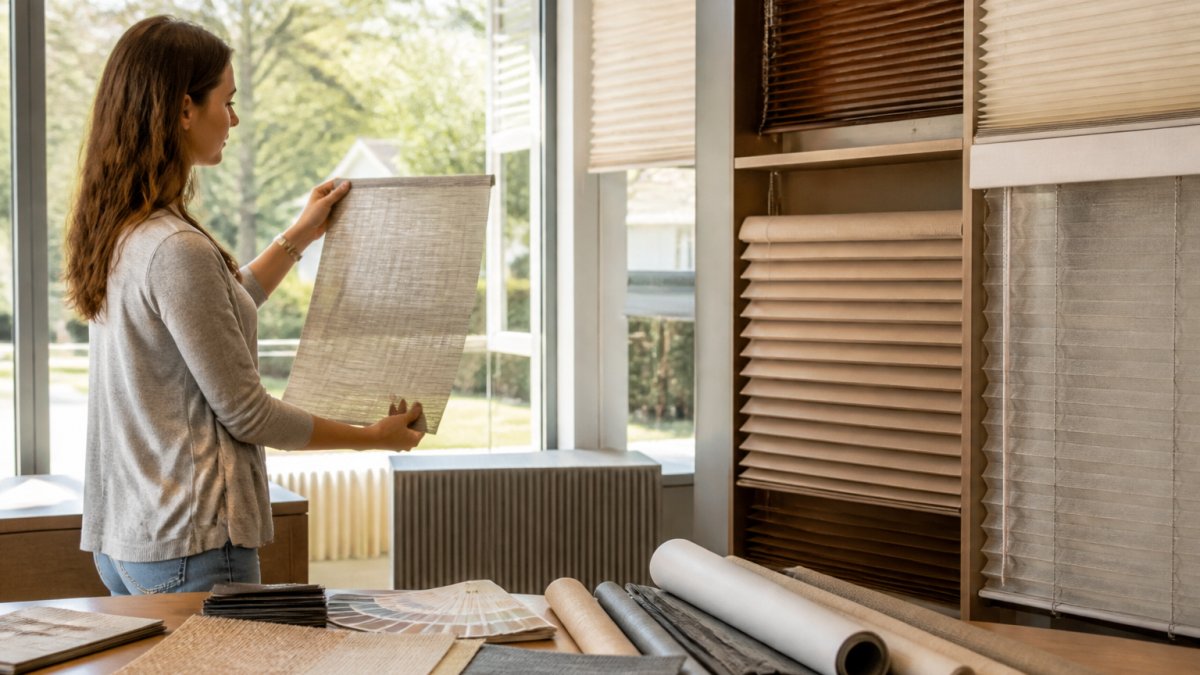
A local provider can visit your home, measure every window including the awkward ones, and bring samples you can hold against your actual wall color and light.
For older homes with non-standard window sizes, this is often the single biggest factor in whether your shades fit cleanly or leave light gaps. If you've been burned by a previous set that never sat right, a local measure is the fix.
Affordable Custom Blinds Without Sacrificing Quality
Affordable custom blinds are absolutely achievable, but "affordable" and "cheap" are not the same thing. The savings come from choosing the right material and provider, not from cutting corners on fit.
Here's where budget-conscious buyers can save without regret:
- Choose cellular or roller shades over Roman or wooden styles for high-traffic windows where fabric soft folds add cost without added function.
- Skip motorization on windows you rarely adjust, like a fixed transom or a window behind furniture.
- Bundle multiple windows in one order to reduce per-unit fabrication and shipping costs.
- Measure carefully if you go the DIY route to avoid the single most expensive mistake: a re-order.
Durability is where cheap shades betray you. Fabric that fades or warps after a couple of seasons costs more over time than a mid-range shade that lasts.
Custom Shade Installation: DIY vs. Professional
Custom shade installation is genuinely DIY-friendly for standard roller and cellular shades, but professional installation pays off for large, heavy, or oddly shaped windows.
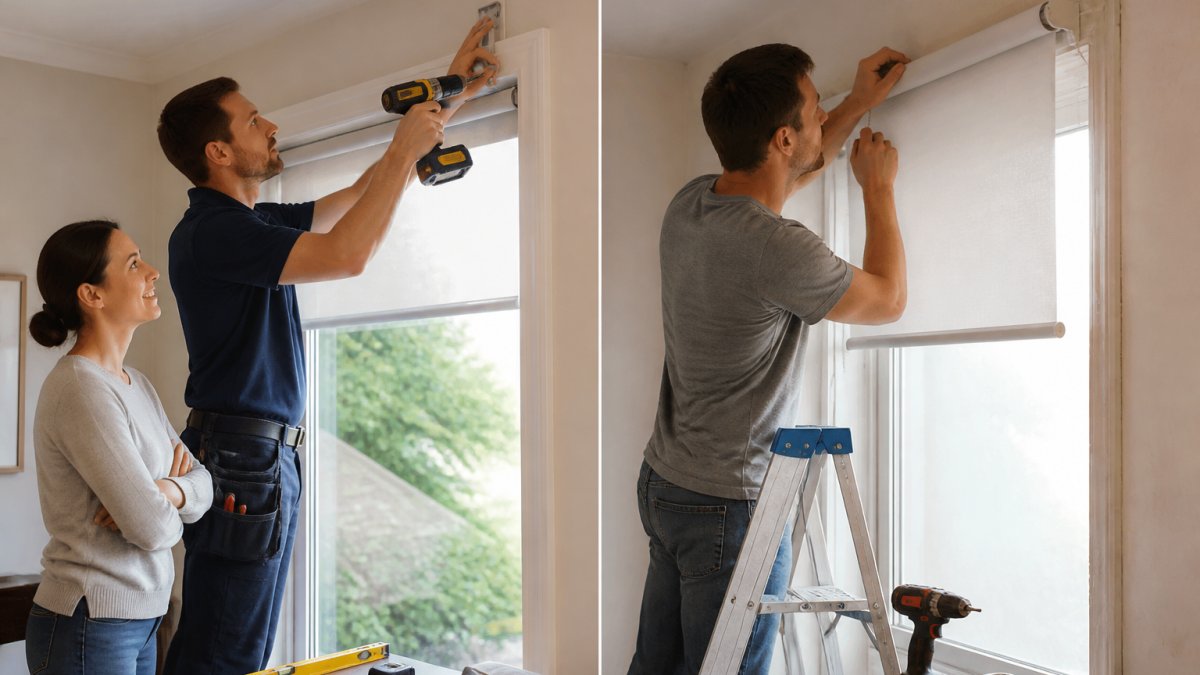
What You'll Need for DIY: a tape measure, a pencil, a drill, a level, and the mounting hardware that comes with your shades.
Step 1: Confirm your measurements twice. Measure width and height at three points each and use the smallest number.
Step 2: Mark and level your brackets. A level here prevents a crooked shade that never quite closes.
Step 3: Mount and test. Hang the shade, test the raise and lower action, and adjust tension if needed.
Professional installation makes sense when you have more than a handful of windows, when the shades are heavy, or when your walls are tricky.
Motorized Roller Shades and Smart Home Integration
Motorized roller shades are the fastest-growing category in window coverings, and they've moved well past luxury pricing. You can now automate a single window or an entire house, and control everything from your phone or a voice assistant.
What most guides miss is that motorization is rarely worth retrofitting onto cheap shades. The motor is only as good as the shade it drives, so start with a quality shade and add motorization where it genuinely helps.
The windows where motorization earns its keep:
- Hard-to-reach windows above furniture, stairwells, or tall great-room glass.
- South- and west-facing windows where you want shades to close automatically as the sun hits.
- Whole-home setups where you want one schedule to control every window at once.
For a single bedroom window you open by hand, the extra cost rarely pays back. For a wall of afternoon-sun glass, it's a different story.
What to Compare Before You Choose a Custom Shade Provider
Five factors decide whether a custom shade purchase goes well: measurement method, warranty terms, installation, lead time, and post-sale service. Here's what a good answer looks like for each, and what should make you walk away.
1. Measurement method. Ask directly: who measures, and what happens if it's wrong?
- Best answer: the provider measures in your home and re-fabricates at their cost if the fit is off.
- Acceptable answer: you measure, but the provider offers a measurement guide, a tolerance check, and a clear policy on remakes.
- Walk-away answer: "We can't be responsible for measurements you provide" with no remake option. That's a legitimate policy, just know you're carrying the risk.
2. Warranty terms. "Lifetime warranty" is marketing until you read the exclusions. Ask three questions:
- Does it cover the motor separately from the fabric? (They usually have different terms.)
- Does it cover labor to remove and reinstall a defective unit, or just the replacement part?
- Is it transferable if you sell the house? A transferable warranty is a small but real resale asset.
3. Installation. Confirm whether installation is included, add-on, or unavailable. If it's add-on, get the per-window price in writing before you order, it's the line item most likely to surprise you at the end.
4. Lead time. Ask for the lead time from order to installed, not from order to shipped.
**5.
A short decision framework
- Standard windows, lowest price, comfortable measuring yourself → online direct-to-consumer, with a remake policy you've read.
- Older or odd-sized windows, or you've been burned before → local provider with in-home measure. The premium buys down the reorder risk.
- Hands-off convenience, multiple rooms → full-service provider that measures and installs, even at a higher per-window cost.
- Whole-home motorization → prioritize providers who support the smart-home platform you already use and can service motors locally, because a dead motor in a hard-to-reach window is a real problem.
The three questions to ask every provider
- Who measures, and who pays if it's wrong?
- What does the warranty cover, and does it include labor?
- Who installs, and what does that cost per window?
Write the answers down. The provider that answers all three clearly, in writing, before you pay a deposit is the one worth your money, regardless of which service model they represent.
Window covering safety and corded-product guidance
Frequently Asked Questions
What should I compare when choosing a custom shade company?
Start with total cost: product, measuring, delivery, installation, and any warranty fees. Then check whether the company measures on site or asks you to self-measure, since a wrong measurement on custom shades usually means no returns. Ask about warranty length and what it covers, whether installation is in-house or subcontracted, and how long from order to install. A local provider that handles measuring and installation under one roof removes most of the risk.
Are local window covering companies cheaper than national brands?
Not always on sticker price, but often on total cost. National brands carry large marketing budgets and franchise fees that get built into pricing, while a local provider can pass those savings on. Local companies also avoid shipping costs on oversized shade boxes and can often fix a measurement issue without a full reorder. Compare the full quote, including installation and warranty terms, before deciding which is actually cheaper.
Do custom shade companies offer measuring and installation?
It depends on the provider. Online retailers typically ship shades to your door and expect you to measure and install them yourself. Local providers usually send someone to measure every window, note any out-of-square frames, and install the finished shades. For older homes with irregular window sizes, professional measuring and custom shade installation prevents the light gaps and uneven hangs that come from self-measuring.
Is it better to buy custom shades online or from a local installer?
Online works well if your windows are standard sizes and you are comfortable with a tape measure and a drill. A local installer makes more sense when windows are oddly shaped, when you want motorized roller shades wired or paired with a smart hub, or when you simply do not want to deal with returns on a mis-measured order. Local providers also give you a person to call if a shade needs adjusting later.
Choosing the right window coverings shouldn't feel like a gamble on whether your shades will actually fit. At Towersunitedblinds, we take the guesswork out of it with in-home measuring, a wide range of roller, wooden, cellular, and Roman styles, and professional installation that protects your walls and windows. Our Troutdale and Oregon customers consistently tell us the process was easy and the prices were the best in town. Call us today to get started.