 listicle
Best Window Shades for Old Homes: 7 Period-Perfect Options
Table of Contents
- Window Shades for Old Homes: What Sets Them Apart
- Quick Comparison Table
- 1. Roman Shades for Historic Homes
- 2. Cellular Shades for Older Homes: Insulation Meets Subtlety
- 3. Wood Venetian Blinds and Plantation Shutters
- Window Treatments for Historic Homes: Handling Irregular and Shallow Windows
- Room-by-Room Recommendations for Old Homes
- Frequently Asked Questions
Last Updated: October 16, 2026
Window Shades for Old Homes: What Sets Them Apart
Choosing window shades for old homes means balancing architectural character with comfort and energy efficiency. Historic windows often have shallow frames, uneven sizing, and period details that modern treatments can enhance or destroy.
At Towersunitedblinds, we've worked with homeowners looking to improve their homes. The most common mistake is installing contemporary shades that ignore the home's original aesthetic, a sleek motorized roller shade can look jarring against 1920s crown molding.
This guide covers seven proven approaches, from Roman shades that echo traditional fabric treatments to cellular shades that hide modern insulation behind a clean facade. We'll also address the challenges old homes present, irregular windows, shallow frames, fragile trim, and show which solutions work in practice.
Quick Comparison Table
| Shade Style | Best For | Period Match | Insulation | Installation Complexity |
|---|---|---|---|---|
| Roman shades | Traditional, formal rooms | Excellent | Moderate | Moderate |
| Cellular shades | Energy efficiency priority | Good | Excellent | Low |
| Wood Venetian blinds | Classic, transitional homes | Excellent | Low | Moderate |
| Plantation shutters | High-end, permanent look | Excellent | Good | High |
| Roller shades with trim | Arts and Crafts, minimalist | Good | Low | Low |
| Woven wood shades | Natural materials, warmth | Excellent | Moderate | Moderate |
| Motorized options | Convenience, accessibility | Variable | Good | High |
1. Roman Shades for Historic Homes
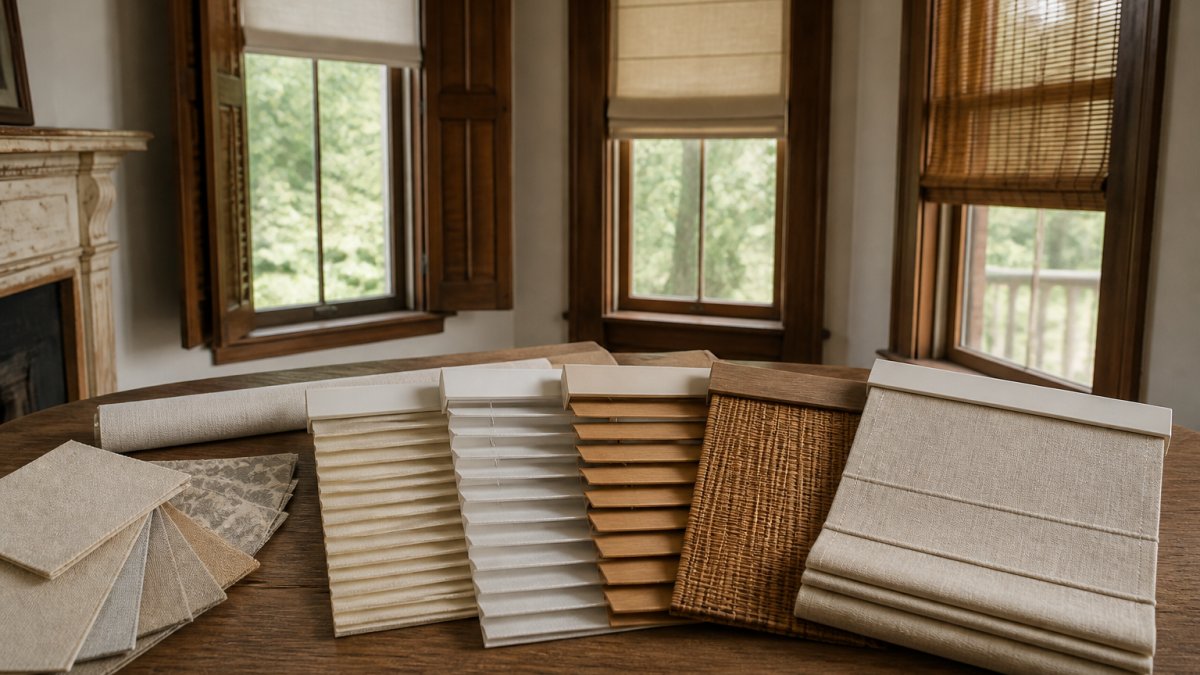
Roman shades remain the gold standard for period authenticity.
The appeal goes beyond aesthetics. Roman shades work well in rooms with tall baseboards, crown molding, and decorative window frames because they don't compete visually.
For custom window shades for old homes, Romans offer flexibility. Choose linen, linen blends, or heavier damasks in period-appropriate palettes. Neutral tones, cream, soft gray, taupe, work across most eras.
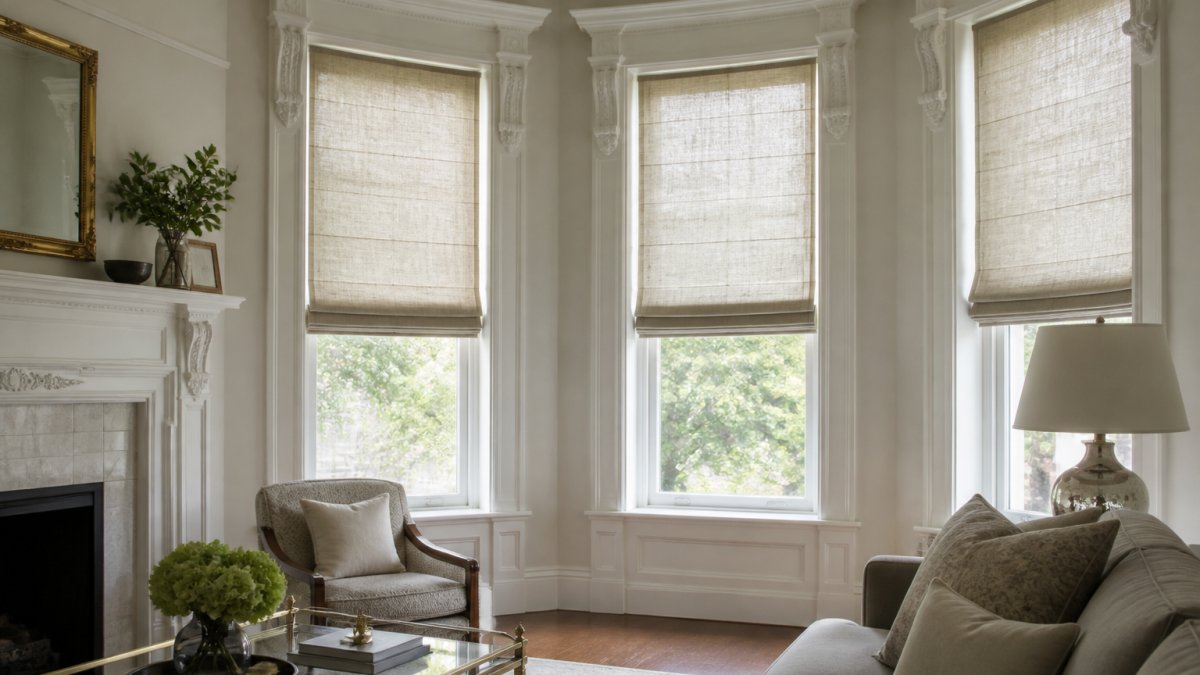
Installation can be tricky in older homes, where frames are often warped or out of square. Inside mounting looks cleaner but demands precise measurement.
2. Cellular Shades for Older Homes: Insulation Meets Subtlety
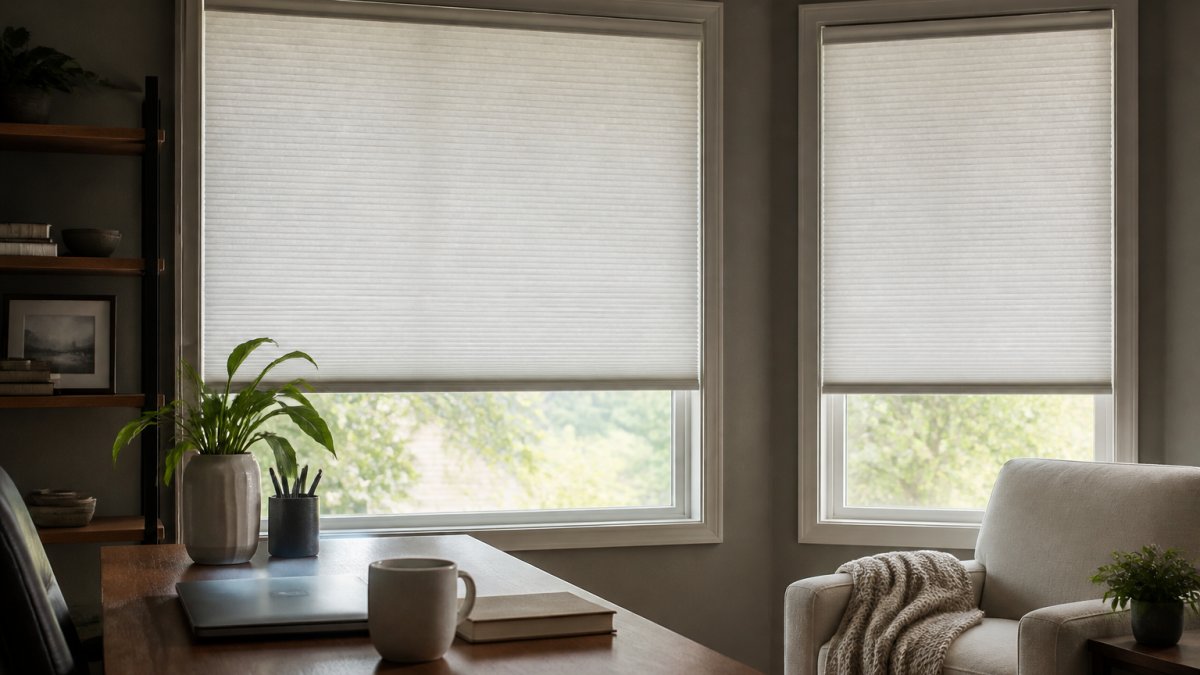
Cellular shades solve the energy problem that plagues old homes: single-pane windows and air leaks. The honeycomb structure traps air, creating an insulating barrier without the bulk of heavy drapes, and they can look period-appropriate when styled correctly.
The key is the right profile and fabric. For historic homes, choose solid, muted colors that don't scream "modern." Cellular shades for older homes work best when the shade recedes visually, soft white, cream, or a color matching your wall.
Light control varies. Blackout versions block nearly all light, useful for bedrooms or sun-exposed rooms where fading is a concern. Living rooms might use light-filtering shades, while bedrooms and media rooms benefit from blackout options.
Installation is straightforward: cellular shades mount inside or outside the frame with simple brackets. They're lighter than Romans, so wall damage risk is lower, important for plaster walls or delicate trim. Towersunitedblinds can install them on virtually any window.
3. Wood Venetian Blinds and Plantation Shutters
Real wood Venetian blinds and plantation shutters are the most historically accurate option for homes built in the early-to-mid 20th century. Wood slats echo period craftsmanship, and shutters reference the functional window treatments that preceded modern blinds.
Venetian blinds tilt their slats for fine control over light and privacy. Wood construction, typically basswood or hardwood, ages beautifully, developing patina over decades. Natural wood tones complement period trim and flooring, and unlike fabric shades, wood doesn't fade or collect dust in folds.
Venetian blinds offer a middle ground: easier installation, similar aesthetic appeal. Wood slats collect dust more readily than cellular shades, and in humid kitchens and bathrooms, wood can warp over time.
Window Treatments for Historic Homes: Handling Irregular and Shallow Windows
Old homes rarely feature standard window dimensions. Settling, past renovations, and original construction quirks create windows that are out of square, too narrow, too tall, or set at odd angles. Off-the-shelf shades rarely fit, so custom sizing and careful mounting decide between a clean result and a visibly crooked one.
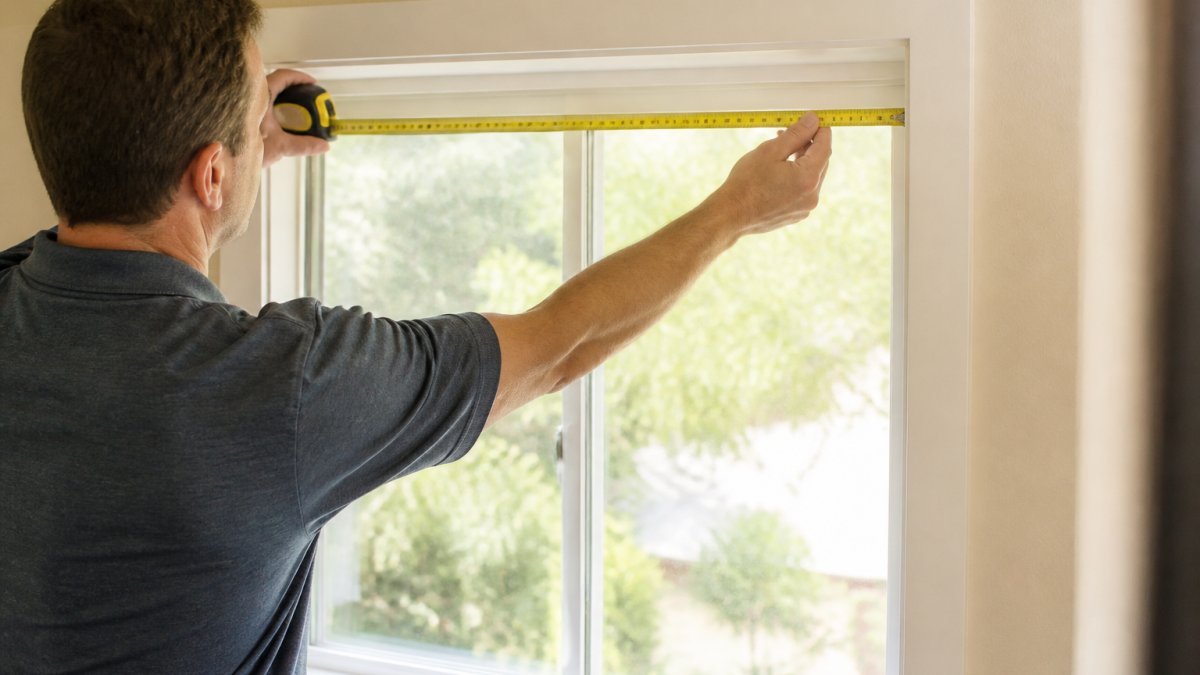
Measuring an Out-of-Square Window
Measure every window in three places for width, top, middle, and bottom, and three places for height, left, center, and right. Order to the smallest width and the longest height for an inside mount, because the shade has to clear the tightest point in the frame. For an outside mount, order to the largest width and add overlap (commonly 2 to 4 inches per side and 2 to 4 inches at the top) so the shade covers the frame gaps that leak air.
A quarter-inch error in a bay window section creates a visible gap, which is why professional measurement matters on irregular openings: a bay window may have five sections at slightly different angles, a turret may feature curved glass, and basement windows may sit in shallow wells.
Mounting Depth: When Inside Mount Is Not Possible
Inside mount requires enough recess depth for the headrail plus clearance for the fabric or slats. As a rule, most inside-mount roller and cellular shades need roughly 2 inches of flat, unobstructed depth; Romans and wood blinds need more. When a frame offers less than about 1.5 inches, common in older construction, outside mounting is usually the only viable option. It also hides frame damage, covers the frame-to-wall gap for better insulation, and visually enlarges the window.
For extreme angles or curved glass, manual roller shades often work better than motorized options, which can bind on uneven surfaces. Cellular and Roman shades can be fabricated to exact dimensions for frame irregularities, and roller shades can be tailored to unusual openings.
Preserving Original Trim, Muntins, and Hardware
Historic trim, muntins, and original sash hardware are often irreplaceable, so the goal is to fit shades without drilling into them. Practical approaches:
- Bracket into the jamb, not the face trim. Inside-mount brackets typically fasten to the window jamb or the top of the recess rather than the decorative face molding.
- Use outside-mount brackets on the wall or a mounting board. A painted or stained mounting board above the window lets you attach hardware without touching original trim, and it can be removed later with minimal patching.
- Avoid screws into fragile plaster or aged wood. In homes with compromised plaster or damaged frames, installation may require reinforcement or a mounting board first.
- Check for lead paint before you drill or sand. Homes built before 1978 may have lead-based paint on trim and jambs. Disturbing it can create a hazard. The U.S. Environmental Protection Agency's lead-safe renovation guidance and its Renovation, Repair and Painting rule apply to many pre-1978 homes, and the U.S. Department of Housing and Urban Development publishes additional guidance for older housing. When in doubt, use certified lead-safe work practices or hire a certified firm.
Custom Sizing and Retrofit Trade-Offs
Custom shades solve irregular-window problems through made-to-fit construction, but the trade-off is cost and lead time. Custom sizes carry a premium over stock, and the wider or taller the opening, the more the price rises. Professional measurement removes guesswork by accounting for frame depth, angle, and obstructions such as radiators, trim, and hardware.
For very shallow frames, outside mounting is the standard approach and often looks cleaner anyway, framing the window more prominently. For deep, clean frames, inside mounting keeps original trim visible and creates a recessed, finished look.
Room-by-Room Recommendations for Old Homes
Different rooms make different demands on a shade: privacy, light control, humidity resistance, and cleanability. In an older home, those demands collide with fragile trim, single-pane glass, and rooms never designed for modern ventilation. Matching the treatment to the room's material risks prevents premature wear and protects original details.
Living Rooms
Living rooms carry the most visual weight, so period authenticity matters most here. Roman shades in natural linen or linen blends create a soft, tailored look that complements traditional furniture and warm wood tones. Where windows are tall and trim decorative, an outside mount above the frame keeps molding visible while the fabric becomes part of the design. Light-filtering fabrics keep the room bright without glare that fades upholstery and rugs.
Bedrooms
Bedrooms prioritize light control and privacy. Blackout cellular or lined Roman shades block morning sun and street light. Layering a light-filtering shade with a blackout layer works but can look cluttered against period trim; a single blackout cellular or lined Roman usually reads cleaner. For high or hard-to-reach windows, manual operation preserves authenticity on accessible windows.
Kitchens
Kitchens combine moisture, grease, and frequent cleaning. Fabric shades absorb humidity and can develop mildew, and wood blinds can warp. Practical choices include roller shades with easy-clean fabrics. Keep shades raised during cooking and use the range hood to limit grease and steam.
Bathrooms
Bathrooms are the harshest environment for any window treatment. Cellular and vinyl roller shades handle humidity better than fabric. Ventilation is critical: run the exhaust fan during and after showers and raise shades periodically to let air circulate. In poorly ventilated bathrooms, even moisture-resistant shades eventually show wear.
Child Safety and Cordless Operation
Older homes often have windows within a child's reach, and older shades may still use looped cords. The U.S. Consumer Product Safety Commission has treated corded window coverings as a strangulation hazard, and the window-covering industry has moved toward cordless and other safer operating systems under the voluntary standard ANSI/WCMA A100.1 (Window Coverings 15(j) Rule Business Guidance). For any room a child can access, choose cordless lift or other cordless operating options, and replace or retrofit older corded shades.
Matching the Room to the Material
A quick way to decide: match the material to the room's biggest risk. High humidity (kitchens, bathrooms) favors cellular, vinyl roller, or shutter construction. High sun exposure (south- and west-facing rooms) favors UV-protective backing and fade-resistant fabrics. High-traffic family rooms favor easy-clean surfaces over dust-collecting fabric folds. In every case, confirm the mounting method protects original trim and that any pre-1978 paint is handled with lead-safe practices.
Frequently Asked Questions
What are the best window shades for old homes with irregular or nonstandard window sizes?
Custom window shades are your best option for irregular openings. Roman shades and roller shades can be made to fit shallow frames, sloped windows, or unusually wide openings. Inside mounting preserves exterior character, while outside mounting works when the frame is too narrow. Measure twice and work with a professional installer familiar with older homes, gaps around edges can compromise both aesthetics and energy efficiency.
How do cellular shades for older homes compare to traditional fabric options?
Cellular shades offer better insulation than most fabric treatments because their air pockets reduce heat transfer, important in older homes with poor thermal performance. However, they read more contemporary than Roman shades or wood blinds. Choose cellular shades if energy efficiency is your priority; select Roman or wood options if preserving historic character matters more. Many homeowners use cellular shades on secondary windows and more visible treatments in primary rooms.
Do window treatments for historic homes need special installation or materials?
Yes. Older windows often have uneven frames, settled walls, and fragile trim that require careful handling. Professional installation prevents damage to plaster, original woodwork, and glass. Avoid drilling into irreplaceable trim; inside-mounted options reduce this risk. Check that shades won't interfere with operable windows or historic hardware. Some materials, like real wood blinds, may need humidity control in homes with older plumbing or moisture issues. Discuss these details with your installer before ordering.
How long does it take to order and install custom window shades?
Timeline depends on the product type, customization level, and installation schedule. Installation itself typically takes a few hours for an average home. Seasonal demand affects timing; spring and summer are busier. Contact a local provider for a specific estimate based on your window count and complexity.