 how-to
How to Clean Roman Shades Properly: A 2026 Guide
Table of Contents
- How to Dust Roman Shades Without Causing Damage
- How to Spot-Clean Roman Shades: Stain-by-Stain Instructions
- How to Clean Roman Shades Without Taking Them Down
- How Often to Clean Roman Shades (and What Changes the Schedule)
- Fabric-Specific Cleaning Decisions: A Quick Reference
- Drying and Preventing Water Marks or Mildew
- Common Mistakes That Damage Roman Shades
- Frequently Asked Questions
Last Updated: October 10, 2026
How to Dust Roman Shades Without Causing Damage
Dust is the number one enemy of fabric shades, and it builds up faster than most homeowners expect. Learning how to clean roman shades properly starts with routine dust removal before dirt ever sets in.
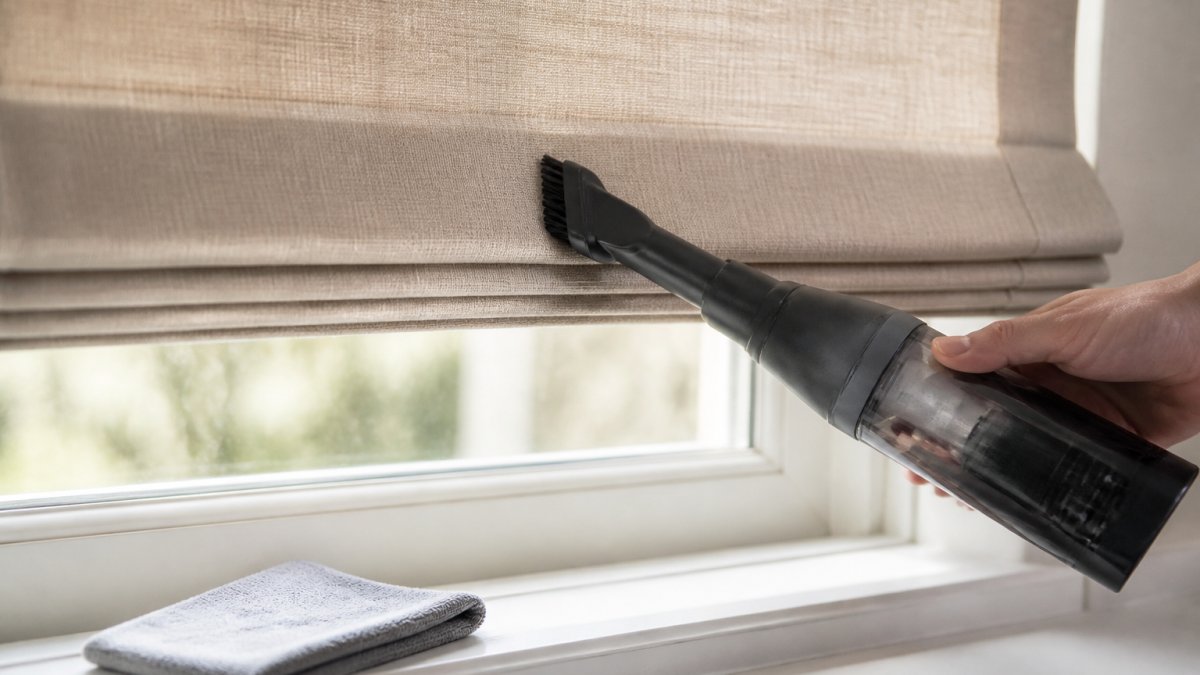
The goal is to lift dust off the fabric, not grind it in. Press too hard and particles work into the weave, turning into gray streaks over time.
Tools That Lift Dust Without Grinding It In
A handheld vacuum with a soft brush attachment does most of the work. Keep suction low and glide the brush across the fabric in short strokes.
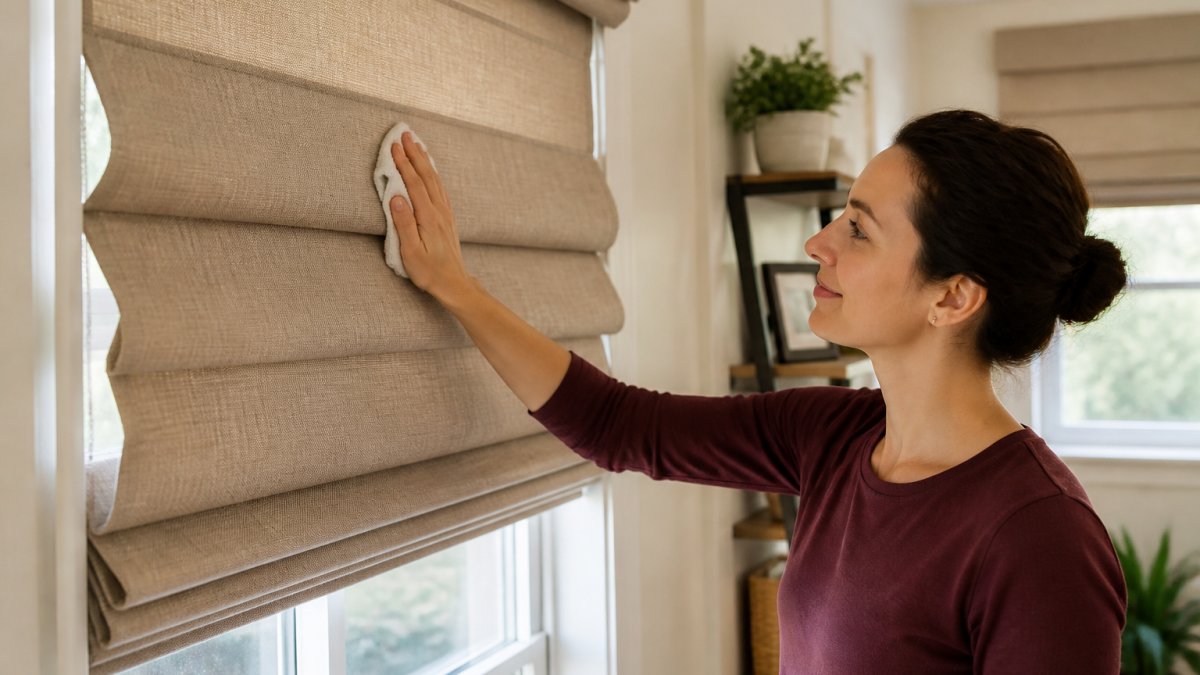
For touch-ups between vacuuming, dry dusting with a clean microfiber cloth catches surface dust without scratching delicate natural fibers.
Here's what we recommend keeping on hand:
- Handheld vacuum with a soft brush or motorized attachment
- Microfiber cloth, washed and lint-free
- Soft brush with natural bristles for pleats and folds
Work top to bottom, starting at the top rail, so gravity carries dust away instead of back onto clean fabric.
How to Spot-Clean Roman Shades: Stain-by-Stain Instructions
Spot cleaning handles the marks that dusting can't. The key is speed and a light touch. The longer a stain sits, the deeper it bonds to the fibers.
Always test any cleaning solution on a hidden corner first, waiting a few minutes to check for discoloration before touching the visible fabric.
| Stain Type | First Move | Solution | What to Avoid |
|---|---|---|---|
| Water-based (coffee, juice) | Blot immediately | Lukewarm water, mild soap | Rubbing the spot |
| Oil-based (grease, lotion) | Blot, then treat | Mild detergent, soft cloth | Hot water |
| Ink or marker | Dab, don't spread | Small amount of solvent cleaner | Soaking the area |
| Dusty smudges | Dry brush first | Microfiber cloth | Wetting before dusting |
Water-Based Stains vs. Oil-Based Stains: Different Approaches
Water-based stains lift with lukewarm water and a drop of mild soap. Dampen a soft cloth, blot gently, and work from the outside of the stain inward so it doesn't spread.
Oil-based stains need mild detergent to break down grease. Apply it to a cloth, not the fabric, blot, then rinse with a clean, damp cloth.
Never rub, it's the fastest way to cause creasing, fabric damage, and a permanent light patch.
How to Clean Roman Shades Without Taking Them Down
Some shades should never come off the wall. Cordless and motorized styles hide tension springs and battery packs in the headrail, and older cord-lock shades can lose cord tension the moment you unhook them. If your shade is hardwired, mounted in a tight frame, or covered by a warranty that voids on removal, cleaning in place is the only safe route.
Step 1: Stabilize the Shade Before You Touch It
Lower the shade fully so the fabric hangs flat and the folds relax. If it has a bottom rail with a weight bar, rest it against the sill rather than letting it dangle, this stops the fabric swinging and keeps cords from jumping their pulleys.
Step 2: Dry-Clean the Surface First
Never introduce moisture to a dusty shade, dust plus water equals mud pushed into the weave. Vacuum both faces on low suction with a soft brush attachment, working top to bottom in short overlapping strokes. Pay attention to the back face, which collects the most grit.
Step 3: Work the Folds With a Dry Brush
Pleats and folds are where dust hides. Slip a soft natural-bristle brush into each fold and sweep downward, letting debris fall away. Don't pull folds open aggressively, repeated stretching breaks the crease memory that gives a Roman shade its shape.
Step 4: Spot-Clean Only What Needs It
For stains, use the blotting method above: dampen a microfiber cloth with lukewarm water and a drop of mild soap, wring it until barely damp, and blot from the outside of the stain inward. Follow immediately with a clean, dry cloth. Never spray cleaner directly onto an installed shade, overspray runs down the fabric and streaks at the fold lines.
Step 5: Support the Fabric While You Work
Slide a clean sheet of cardboard or a plastic cutting mat behind the fabric before spot-cleaning. This gives you a firm backing so you blot against a surface instead of pushing the stain deeper, and protects the glass and trim from runoff.
Step 6: Dry in Place Without Raising the Shade
Leave the shade fully lowered until completely dry. Raising a damp Roman shade traps moisture in the folds and sets creases that may never relax. Run a fan in the room, not pointed directly at the fabric, and give the lining extra time, since it dries slower than the face fabric.
Cleaning Cords, Linings, and Operating Hardware Safely
Cords, linings, and hardware need attention too, but a lighter touch than the fabric.
- Wipe cords with a barely damp cloth to remove dust buildup, then dry them immediately with a clean cloth
- Check the lining for stains, since it faces the window and takes the worst of it
- Dust the headrail and operating mechanism with a dry brush
Wet cords can fray, stretch, or grow mildew inside the weave; a dry brush and quick wipe are enough for routine maintenance.
How Often to Clean Roman Shades (and What Changes the Schedule)
Most roman shades need a light dusting every one to two weeks and a deeper spot clean every two to three months. That's the baseline for an average home.
Several things push that schedule faster:
- Homes near busy roads or with lots of open windows
- Kitchens, where cooking grease travels to nearby fabric
- Pet owners, since pet dander clings to natural fibers
If anyone in the house has allergies, step up dusting to weekly. Fabric shades act like filters, and they hold onto whatever floats through the room.
Fabric-Specific Cleaning Decisions: A Quick Reference
Not every fabric shade cleans the same way. The material decides your method, and guessing wrong can ruin a shade.
| Fabric Type | Dusting | Spot Cleaning | Deep Cleaning |
|---|---|---|---|
| Cotton or linen | Weekly | Lukewarm water, mild soap | Professional cleaning |
| Synthetic blends | Weekly | Mild detergent | Hand washing, gentle |
| Natural fibers (bamboo, jute) | Dry only | Dry brush, minimal moisture | Professional only |
| Silk or delicate weaves | Soft brush | Dry methods first | Professional dry cleaning |
For natural shades and delicate fabrics, moisture is the enemy. When in doubt, follow the manufacturer guidance on the label. If there's no label, treat the shade as delicate and call a professional.
Drying and Preventing Water Marks or Mildew
Drying is the step most people rush, and it is where shades get ruined. Water marks form because when moisture dries unevenly, dissolved minerals and soil wick to the edges of the wet area and deposit there, leaving a ring. The slower and more uneven the drying, the darker the ring, fast, even drying is the whole game.
How to Dry a Roman Shade Without Leaving Rings
After any spot cleaning, blot the area with a clean, dry cloth using light pressure, then blot again with a second dry cloth, the first is already saturated.
Let the shade air dry fully before raising it, keeping it lowered so air reaches both faces and the folds stay open. Never fold, stack, or roll a damp shade, trapped moisture invites mildew and sets permanent creases.
To speed drying and prevent marks:
- Run a fan in the room, angled across the shade rather than directly at it
- Keep the shade lowered until completely dry to the touch, including the lining
- Avoid direct sunlight during drying, which can fade color and dry the face fabric faster than the lining, causing the two layers to pull unevenly
If a Water Ring Already Formed
A fresh ring is easier to remove than an old one. Dampen the entire ringed area evenly, not just the ring, with distilled water on a clean cloth, then blot dry with the two-cloth method. Distilled water avoids adding more minerals. Work quickly, dry evenly, and if the ring persists after one attempt, stop and consult a professional rather than rewetting repeatedly.
Preventing Mildew Before It Starts
Mildew needs moisture, warmth, and darkness, all three present when Roman shades stay damp in a humid room. The prevention rules are simple:
- Never raise a shade that is damp to the touch
- In bathrooms, kitchens, and basements, dust weekly and spot-clean promptly so you never need to wet the fabric heavily
- Leave shades fully lowered after cleaning until dry, and crack a window or run ventilation if the room is steamy
What Mildew Looks Like and How to Respond
Mildew shows up as dark speckles, a gray or black shadow along the folds, or a musty odor that lingers after the room airs out.
If mildew covers more than a small area, has soaked into the lining, or keeps returning after drying, stop treating it yourself. Mildew that has penetrated the weave usually needs professional cleaning or, in severe cases, replacement.
Common Mistakes That Damage Roman Shades
The biggest mistake is over-wetting the fabric. More water doesn't mean cleaner. It means water marks, mildew, and warped fibers.
Other mistakes we see often:
- Rubbing stains instead of blotting, which spreads and sets them
- Using harsh chemicals or solvent-based cleaners on delicate fabric
- Skipping the test patch on a hidden corner
When a shade is heavily soiled, has stubborn stains, or is made of delicate material, professional cleaning is the safer call.
U.S. Consumer Product Safety Commission guidance on window covering safety is worth reviewing if you're handling cords or hardware during cleaning.
Cleaning roman shades properly comes down to patience and the right method for your fabric. At Towersunitedblinds, we help homeowners across the area choose durable Roman, roller, wooden, and cellular shades built to last.
Frequently Asked Questions
Can you wash Roman shades in a washing machine?
Most Roman shades should not go in a washing machine. The agitation can break down natural fibers, cause creasing, and damage the cords or lining. Unless the manufacturer's care label explicitly says machine washable, stick to dusting, spot-cleaning, or professional dry cleaning. For fabric shades that are removable and labeled hand-wash only, use lukewarm water with mild detergent, soak briefly, and rinse gently by hand.
How do you clean Roman shades that haven't been cleaned in years?
Start with a thorough dust removal using a vacuum cleaner with a soft brush attachment or a microfiber cloth. Work from top to bottom to avoid spreading dust. Then spot-clean any visible stains with a mild soap solution and a soft cloth, blotting rather than rubbing. For heavy buildup or stubborn stains, professional cleaning is the safest option. If the shades are still hanging, clean them in place to avoid damaging the mounting hardware.
How do you remove dust from Roman shades?
Use a handheld vacuum with a soft brush attachment on the lowest suction setting. Run it gently across the fabric, starting at the top and moving down. For delicate natural fibers, a microfiber cloth or a clean paintbrush works well. Regular dusting every two to four weeks prevents buildup. If dust has settled deep into the folds, a can of compressed air can help, but keep the nozzle at a distance to avoid forcing dust further into the weave.
What should you do before cleaning Roman shades?
Check the manufacturer's cleaning instructions first, since some fabrics require dry cleaning only. Test any cleaning solution on a hidden area, like the back of a fold or the bottom hem, to check for color discoloration. Vacuum or dust the entire shade before applying any liquid. Gather soft cloths, a soft brush attachment, lukewarm water, and mild detergent. If the shades are motorized or have delicate cords, avoid getting the hardware wet.