 ultimate-guide
Best Custom Blinds for Older Homes: A Practical Guide
Last Updated: November 2, 2026
Quick Summary
The best custom blinds for older homes are measured to the exact opening rather than adjusted afterward, since out-of-square frames, deep plaster walls, and original trim defeat standard sizes. Real wood blinds suit period living rooms and studies, while cellular shades add insulation to drafty single-pane windows.
- Measure recess depth at the left jamb, center, and right jamb, then order to the smallest reading.
- A standard 1-inch wood blind needs roughly 2 inches of recess depth for a flush inside mount.
- An inside mount preserves original casing but requires enough depth and a reasonably square frame.
- Real wood dislikes sustained moisture, so choose faux wood for kitchens and bathrooms.
- Cordless lift systems and motorized options can reduce cord-related hazards for homes with children.
Table of Contents
- Why Custom Blinds Are the Right Call for Older Homes
- Custom Wood Blinds for Older Homes: Warmth and Period Character
- Cellular Shades for Old Windows: Comfort and Energy Efficiency
- Blinds for Deep-Set Windows: Working With Thick Walls and Trim
- Custom Blinds for Unusual Window Sizes: Irregular and Out-of-Square Openings
- Comparing Blind Styles, Materials, and Costs for Older Homes
- Cords, Child Safety, and Preserving Original Woodwork
- Booking a Custom Blind Consultation for Your Older Home
- Frequently Asked Questions
Why Custom Blinds Are the Right Call for Older Homes
Older homes rarely cooperate with standard window sizes. Out-of-square openings, deep plaster walls, and original trim mean store-bought blinds leave gaps, bind against casing, or force you to drill into woodwork you'd rather protect. That's why the best custom blinds for older homes are measured to the opening, not adjusted after the fact. If you want to compare period-appropriate options first, see our guide to the best window shades for old homes. The U.S. Department of Energy guidance on window coverings notes that properly fitted treatments also reduce heat gain and loss at the glass.
Custom Wood Blinds for Older Homes: Warmth and Period Character
Real wood blinds are the default choice for period interiors, and for good reason. Natural grain and a subtle texture sit comfortably beside original millwork, and adjustable slats give you precise control over light and privacy through the day.
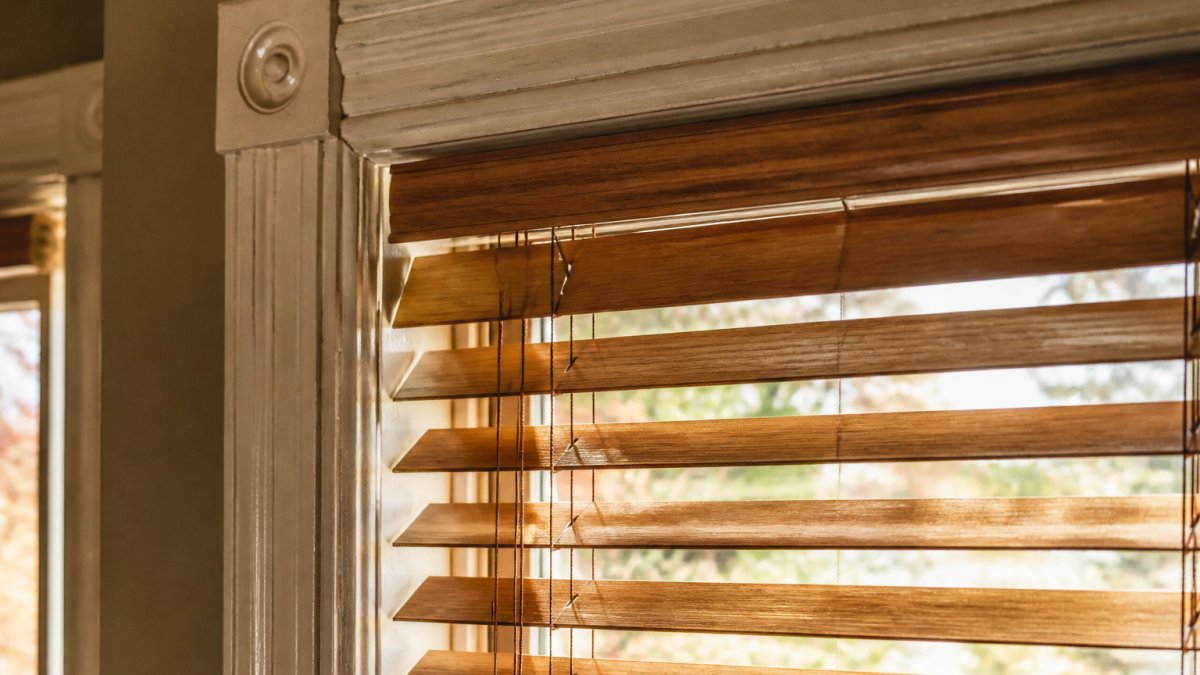
A common mistake is choosing a slat size before checking the window's proportions. Narrow slats suit smaller openings; wider slats can overwhelm a modest period window.
Cellular Shades for Old Windows: Comfort and Energy Efficiency
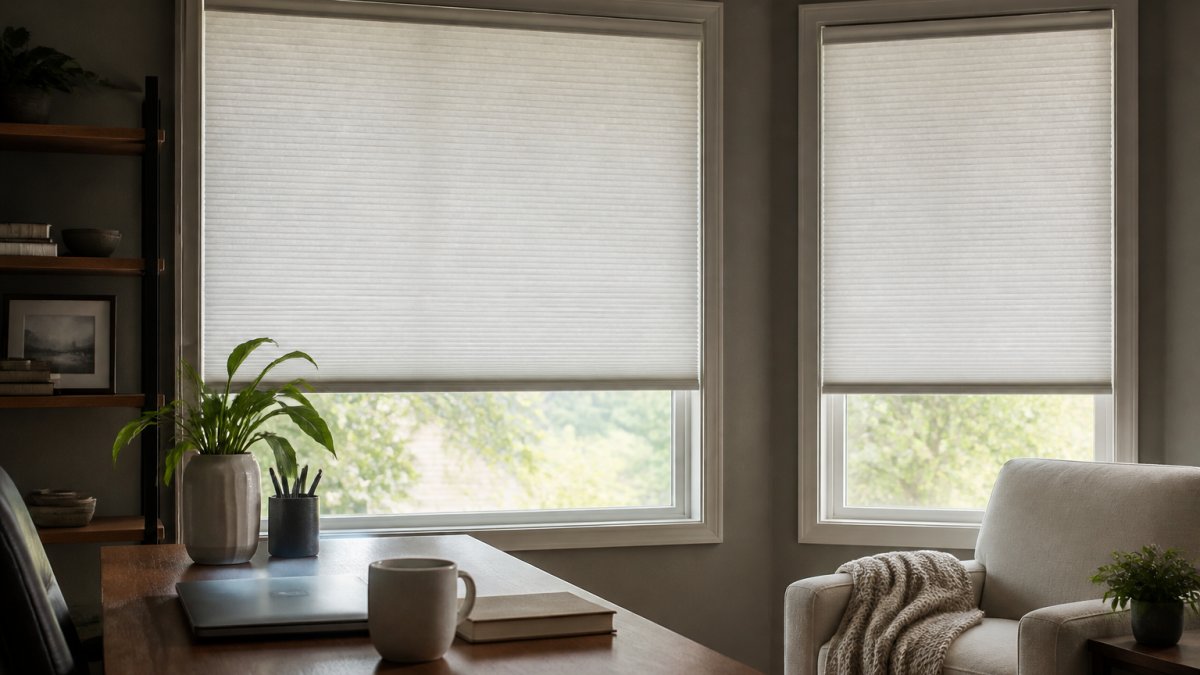
Cellular shades trap air in their honeycomb cells, creating an insulating layer at the glass. For older windows with single panes or worn seals, that insulating layer can help reduce drafts and solar heat gain, and the shades still fold up when you want the view back.
For a deeper comparison of how cellular shades stack up against roller shades on efficiency, our guide to roller shades vs cellular shades covers the trade-offs in detail.
Blinds for Deep-Set Windows: Working With Thick Walls and Trim
Deep-set windows are the defining challenge in older construction, and blinds for deep-set windows need to account for the full recess.
Start by measuring the recess depth at three points: the left jamb, the center, and the right jamb. Older plaster walls are rarely uniform, and a recess that measures 3 1/2 inches at one side can measure 4 inches at the other. Write down the smallest reading, because that is the depth your headrail has to clear. As a rule of thumb, a standard 1-inch wood blind needs roughly 2 inches of recess depth for a flush inside mount; a 2-inch slat blind needs closer to 2 1/2 inches; and a cellular shade with a continuous-cord lift needs about 1 1/2 inches.
Inside mount versus outside mount. An inside mount keeps the blind within the reveal and preserves the look of original casing, which is why it is usually the right call in a period home. The trade-off is that inside mounts require enough depth and a reasonably square frame. An outside mount covers the opening and the trim, hides gaps, and works on shallow or out-of-square frames, but it sits forward of the wall and can obscure decorative casing. In an older home, the compromise is often a modified outside mount: the headrail is mounted to the wall above the casing, and a return or side channel closes the gap between the blind and the trim so you do not see daylight at the edges.
Bracket placement and protecting original woodwork. The goal is to fasten into the window jamb or the wall, not through the face of historic casing.
Return and side-channel systems. A return is a trim piece that closes the gap between the blind and the wall on an outside mount; a side channel is a track that guides the blind edges and blocks light. Both are useful on deep-set windows because they let you mount forward of the trim without leaving a visible gap. The catch is that side channels add width, so measure the opening plus the channel depth before ordering, and confirm the channel will not interfere with sash operation on double-hung windows. On shallow frames, a bulky headrail plus a side channel can exceed the available depth, which is the most common reason a custom order comes back unusable.
Working with storm windows and existing curtains. If the window has a storm panel or an interior storm insert, the blind has to clear it through the full travel of the sash.
Custom Blinds for Unusual Window Sizes: Irregular and Out-of-Square Openings
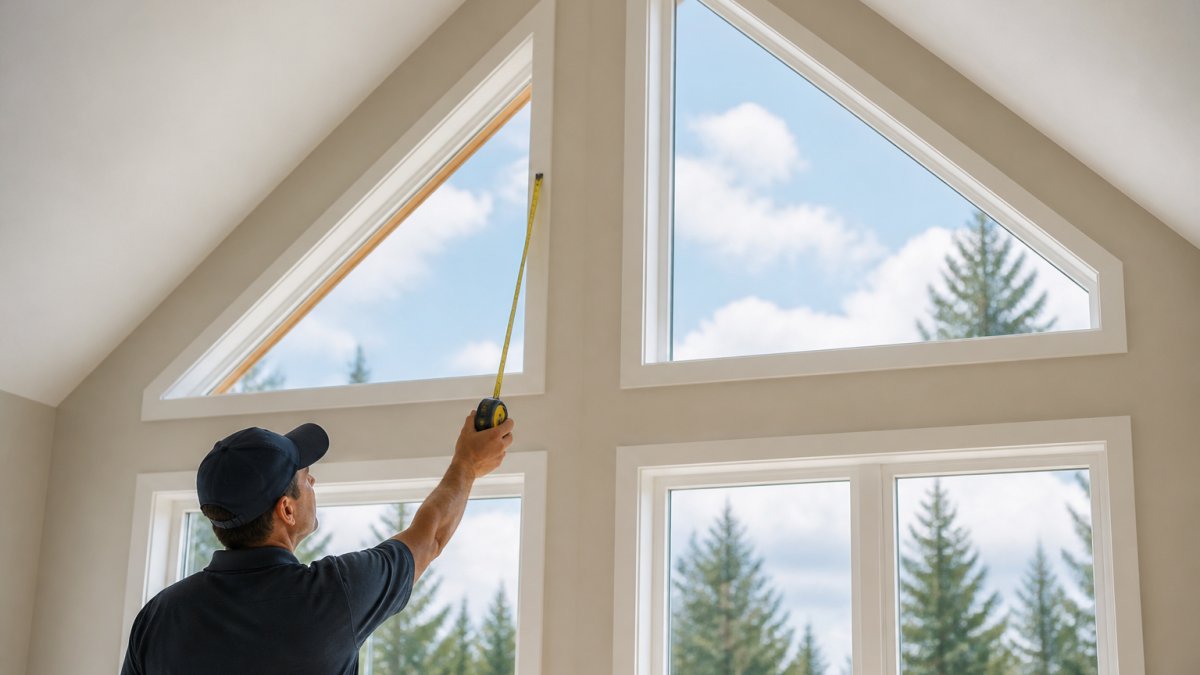
Custom blinds for unusual window sizes solve the problem that ready-made products can't: openings that are wider at the top than the bottom, arched frames, or dimensions that fall between standard sizes.
Measure width at the top, middle, and bottom, and height at the left, center, and right. If the readings differ, order to the smallest dimension and let the installer handle the reveal. Our article on how to measure non-standard windows walks through the full process before you place an order.
Comparing Blind Styles, Materials, and Costs for Older Homes
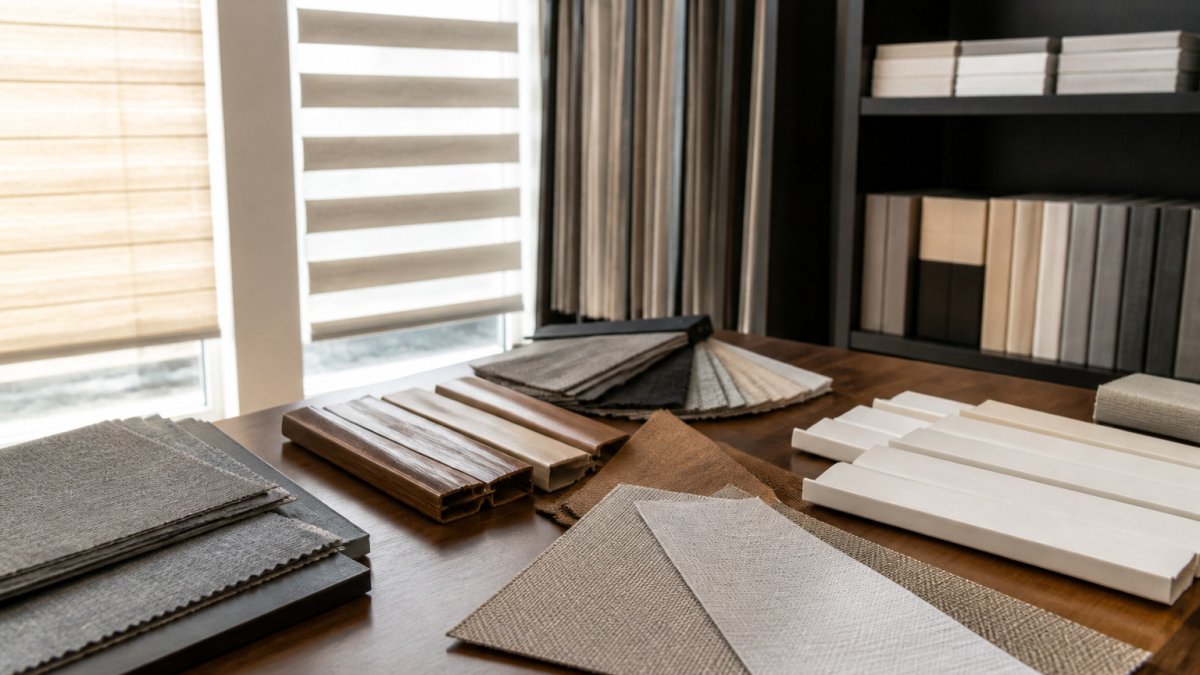
Material choice drives both appearance and longevity in an older home, and the right answer depends on the room.
| Style | Best For | Material Trade-Off | Watch For |
|---|---|---|---|
| Real wood blinds | Living rooms, studies | Warm grain, dislikes moisture | Warping near steam; heavier headrail |
| Faux wood blinds | Kitchens, bathrooms | Moisture-resistant, heavier | Less natural look; more weight on old jambs |
| Cellular shades | Drafty single-pane windows | Insulating, fabric stack | Sash clearance; fabric can trap dust |
| Roman shades | Bedrooms, formal rooms | Soft fabric, classic look | Fabric wear at folds; cord or cordless lift choice |
| Shutters | Street-facing windows | Durable, architectural | Depth required; hinge and frame mounting |
Moisture tolerance. Real wood is the right look for a study or living room but the wrong choice directly over a shower or beside a steamy range.
Custom-blind cost factors. Custom blinds are built to your measurements, which is why they typically differ in price from ready-made products.
Lead times and project planning. Custom orders are made to measure, so lead time is part of the budget. Lead times vary, so ask us for current timing when you request a quote. Build the schedule around the installation date, not the order date: measure after any painting or trim repair is finished, confirm the mounting method in writing, and leave a buffer before a room is needed for guests or a holiday. If you are replacing treatments throughout an older home, sequence the project room by room, starting with the windows that are hardest to fit, because those are the ones most likely to need a second measurement or a revised bracket plan.
Our breakdown of why custom blinds cost more than store-bought explains where the money goes before you set a budget.
Cords, Child Safety, and Preserving Original Woodwork
Cord safety is not optional. The U.S. Consumer Product Safety Commission guidance on window covering cords sets out the hazards and the cordless and tensioned options that reduce them, and any blind you order for a home with children should follow that guidance. Cordless lift systems and motorized options can reduce cord-related hazards.
Preserving original woodwork matters just as much. Specify an inside mount wherever the frame allows it, use trim-friendly brackets, and avoid drilling through historic casing. If the woodwork is protected in your area, check local rules before any alteration.
Booking a Custom Blind Consultation for Your Older Home
The reliable way to get this right is to have someone measure on site. A consultation confirms recess depth, trim condition, and mounting method before anything is ordered, which is exactly where most DIY projects go wrong.
You can discover the perfect window coverings for your home and arrange a consultation at the same time. Our customers have described the variety of options and the helpful guidance they received as making the process easy and enjoyable. If you've been putting off the awkward window, this is the point to stop guessing.
Frequently Asked Questions
What type of blinds look best in an older home?
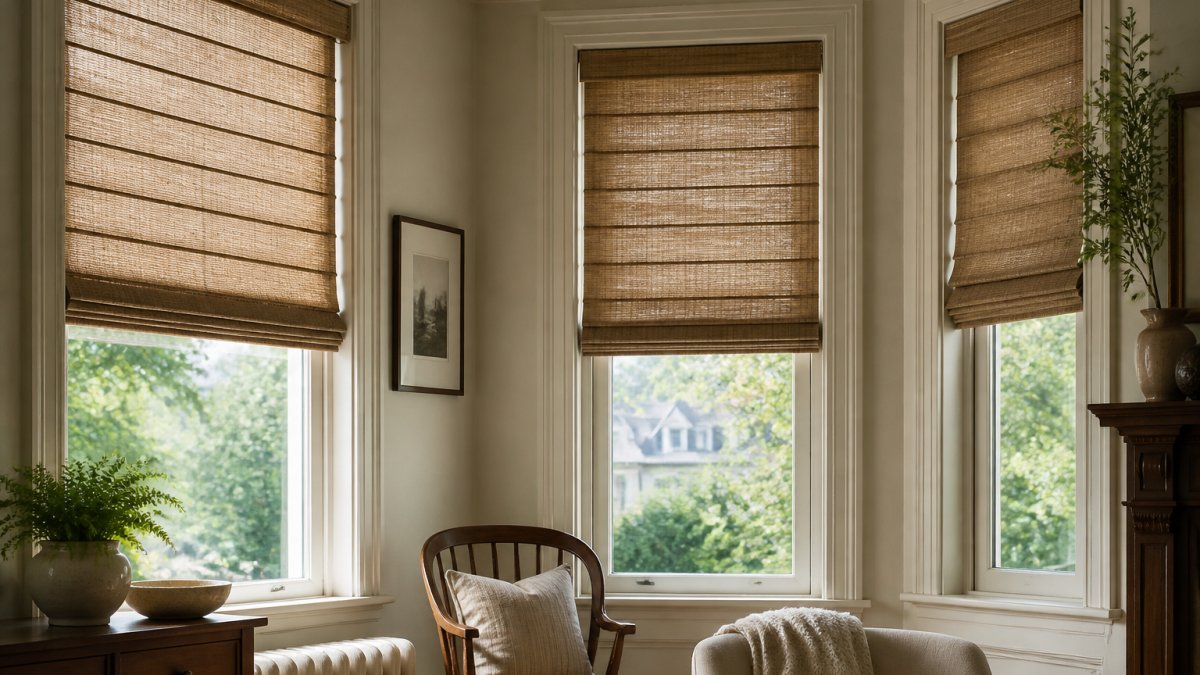
Wood and faux-wood blinds and Roman shades tend to suit older homes because their lines match traditional trim and millwork. Real wood blinds add natural grain that complements period details, while Roman shades soften a room without hiding the window frame. For homes with deep-set windows, inside-mount blinds keep the reveal visible. The right pick depends on your window depth, how much light control you need, and whether you want to preserve original woodwork. A custom measure is the safest way to confirm fit before ordering.
Are wood blinds a good choice for older homes?
Yes, with one caveat. Real wood blinds bring warmth, texture, and a classic look that pairs well with traditional decor, . The caveat is moisture: avoid real wood in bathrooms or kitchens where humidity swings. In those rooms, faux wood gives you the same look with better resistance. For living rooms, bedrooms, and dining rooms in an older home, custom wood blinds in a finish that matches your trim are a strong, period-appropriate choice.
How do you measure older windows for custom blinds?
Measure width at the top, middle, and bottom of the opening, and height at the left, center, and right, then use the smallest width and longest height for an inside mount. Older windows are rarely square, so this catches out-of-square openings before you order. Check the depth of the reveal too, since inside mounts need enough flat depth to fit the headrail. If your frame is shallow, uneven, or has bulky original trim, an outside mount or a professional measure avoids light gaps and returns.
What blinds work best for unusually shaped or deep-set windows?
Deep-set windows usually take an inside mount so the blinds sit back in the reveal and the original trim stays visible. For arched, angled, or out-of-square openings, custom sizing is often the best route for unusual openings. Cellular shades work well in shallow frames because the fabric stacks tight, and Roman shades suit deep reveals where you want fabric rather than slats. Bring exact measurements and photos to a consultation so the fit can be confirmed against your specific opening.
Are cellular shades suitable for older homes?
Cellular shades fit older homes well, especially where drafts and thin single-pane glass are a concern. The honeycomb pockets trap air at the window, which can make rooms feel more comfortable and reduce heat loss. They also stack compactly, so they work in shallow frames where bulkier treatments will not fit. Choose a light-filtering fabric for living spaces and a room-darkening option for bedrooms. In a period home, pick a neutral color that blends with your trim rather than a stark white that clashes with aged woodwork.
How can you improve privacy and light control without changing a home's character?
Layer the window instead of replacing what is there. A sheer curtain under wood blinds or a Roman shade gives daytime privacy while keeping the period look, and the blinds handle light control when you need it. Choose adjustable slats so you can tilt light without fully closing the room. Match finishes to existing trim and hardware rather than introducing a new metal tone. For street-facing windows, a top-down bottom-up shade lets you block the view in while still letting light in at the top.
Older homes demand a fit-first approach, and guessing at measurements is where most projects stall. Towersunitedblinds measures every opening on site, recommends styles that suit the architecture, and installs with care for original trim, backed by a range of wooden, cellular, roller, and Roman options. Get started with Towersunitedblinds and give every window in your older home a covering that actually fits.